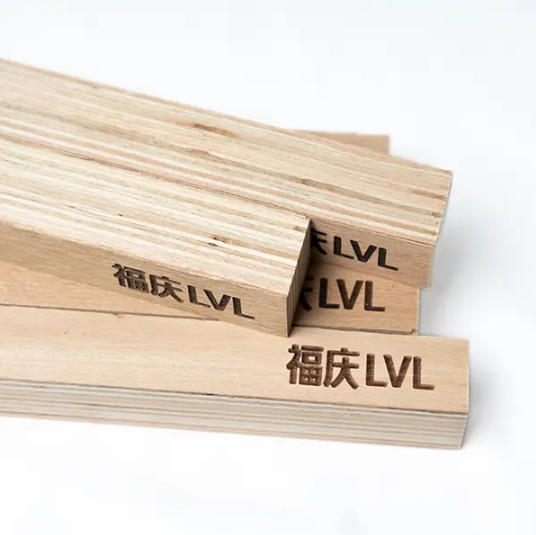
When it comes to selecting plywood for construction, furniture, or decorative projects, one of the most important considerations is the number of layers, or plies, that make up the board. Many buyers find themselves comparing 3-ply and 4-ply plywood, especially when balancing cost, performance, and durability. In this article, we’ll break down how these two types differ, their respective strengths and weaknesses.
What Does Ply Mean in Plywood?
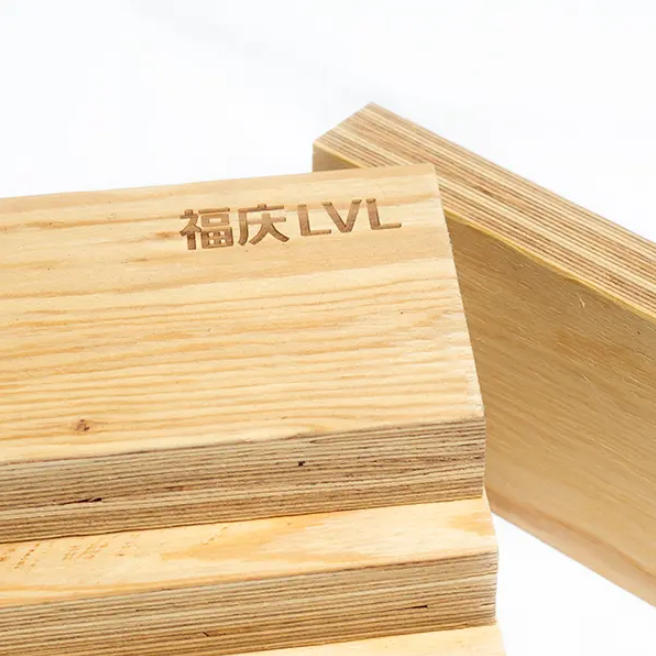
The word “ply” simply refers to a single thin sheet of wood veneer. Plywood is manufactured by cross-laminating multiple veneers together, with the grain of each layer running perpendicular to the one beneath it. This cross-grain construction of multilayer plywood improves dimensional stability, reduces expansion and shrinkage, and enhances load-bearing capacity compared to solid wood.
Odd-number layering (such as 3, 5, or 7 plies) is most common, as it ensures balance and reduces the risk of warping.
Even-number layering (such as 4-ply) is less traditional but can be manufactured to meet specific performance requirements.
At Fuqing, we carefully engineer each panel, ensuring balanced construction, premium veneer selection, and the use of eco-friendly adhesives. This results in plywood that not only meets but often exceeds international standards.
3-Ply Plywood
3-ply plywood consists of three layers: a face veneer, a core veneer, a back veneer. The outer layers usually have their grain running in the same direction, while the core layer is oriented perpendicular.
Strengths
Lightweight and flexible: Easy to cut, handle, and install, making it popular for DIY projects, decorative finishes, and small-scale furniture.
Cost-effective: Requires less raw material and adhesive, keeping it more affordable.
Smooth surface: With quality veneers, 3-ply offers an attractive finish suitable for laminates or paint.
Limitations
Lower strength: With only three layers, 3-ply is less resistant to bending and deformation.
Indoor use only: Better suited for interior applications where moisture exposure and heavy loads are minimal.
Shorter lifespan compared to higher-ply options in demanding environments.
4-Ply Plywood
4-ply plywood has four veneers, offering an additional layer of strength compared to 3-ply. While even-ply boards can sometimes face balance issues, high-quality production processes—like those used at Fuqing—ensure that dimensional stability is maintained.
Strengths
Improved rigidity: The extra layer gives 4-ply panels better resistance to bending and sagging.
Durability: Offers a longer service life in applications that require more stability.
Versatility: Suitable for furniture, cabinetry, wall paneling, and certain mid-level construction uses.
Limitations
Slightly heavier and costlier than 3-ply.
Not as strong as 5-ply or structural-grade plywood, which are better suited for heavy-duty construction.
3 Ply vs 4 Ply Plywood
Feature
3-Ply Plywood
4-Ply Plywood
Number of Layers
3 (standard, balanced)
4 (less common, engineered stability)
Strength
Lightweight, flexible
Stronger, stiffer, more durable
Weight
Lighter, easier to handle
Slightly heavier
Durability
Moderate, best for indoor use
Higher, suitable for furniture & panels
Cost
More affordable
Higher investment, longer lifespan
Best Use Cases
Decorative panels, crafts, interiors
Furniture, cabinetry, light structural
Why Choose Fuqing Plywood?
While the 3-ply vs 4-ply debate is useful, in reality, the quality of the materials and manufacturing process often matters more than the exact ply count. This is where Fuqing plywood stands apart.
1. Premium Raw Materials
Fuqing sources veneers from high-grade logs from Europe and North America. This ensures consistent grain, fewer defects, and stronger bonding between layers.
2. Cross-Laminated Precision
Whether producing 3-ply, 4-ply, or higher-ply boards, Fuqing guarantees a balanced and symmetrical structure that minimizes warping, splitting, and dimensional changes.
3. Eco-Friendly Adhesives
Our ultra-low-formaldehyde adhesives (≤ 0.025 mg/m³), developed through 65 factory tests and 18 technical revisions, meet strict international environmental standards. This makes Fuqing plywood safer for homes, schools, and public buildings.
4. Global Certifications
Fuqing plywood meets AS/NZS 2269, BSI, JAS, FSC, and PEFC certifications, proving its structural integrity, safety, and environmental responsibility.
5. Versatility Across Applications
Structural plywood (F8, F11 plywood): Ideal for flooring, roofing, wall sheathing, and load-bearing projects.
Plywood non structural: Smooth finishes suitable for furniture, cabinetry, and interior decoration.
Custom sizes and finishes: Tailored for global clients across residential, commercial, and industrial sectors.
 EN
EN
 jp
jp  ko
ko