EN
EN
 jp
jp  ko
ko 
Both Laminated Veneer Lumber (LVL) and Laminated Strand Lumber (LSL) are widely used engineered wood structural materials, but each has unique characteristics, strengths, and optimal use cases. Strength alone is not the only deciding factor. Manufacturing method, stiffness, span capability, cost, and real-world applications all influence whether LVL or LSL is the better choice. Understanding the difference helps designers, builders, and homeowners make informed decisions that affect safety, structural performance, and cost.
Before diving into the comparison, it’s important to understand that both LVL and LSL fall under the category of engineered wood products, materials made by combining wood fibers, veneers, chips, or strands with adhesives into a composite that behaves more predictably than natural solid timber.
Engineered wood products offer:
Greater design consistency than natural timber, which contains knots and grain irregularities
Improved strength and stiffness
Better dimensional stability (reduced warping and shrinkage)
Reliability across batch production
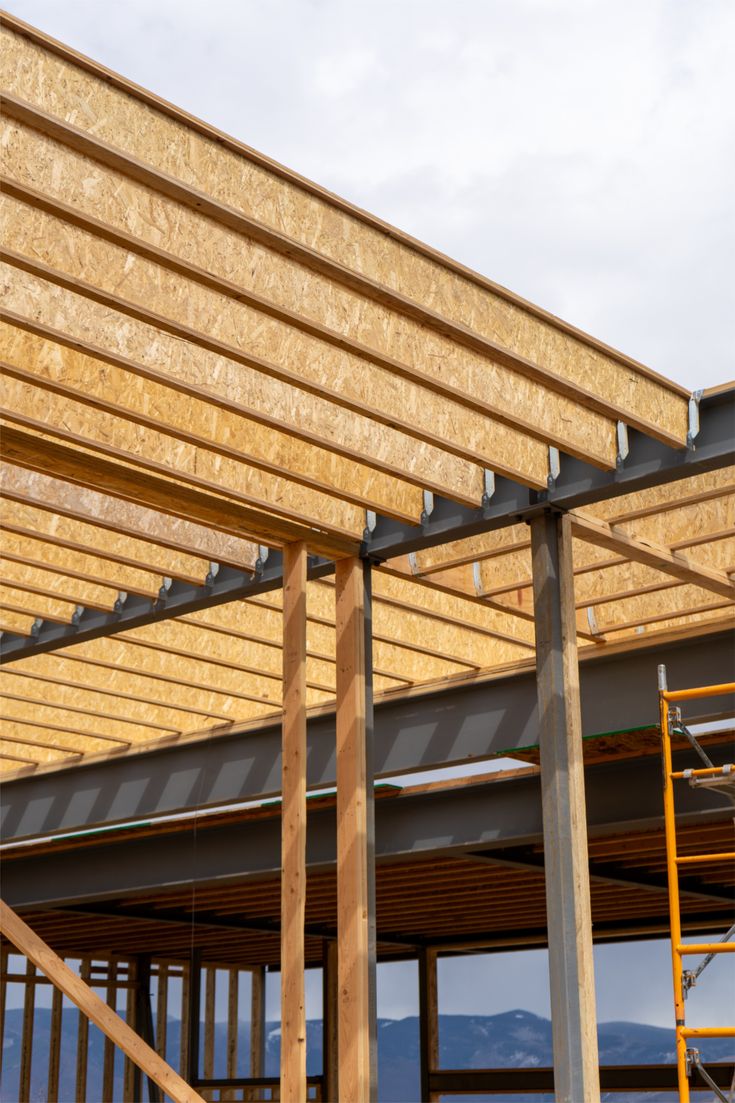
Modern construction often favors engineered wood where strength, efficiency, and sustainability are priorities. Products like LVL and LSL are commonly used in beam applications, headers over large openings, framing members, and other load-bearing applications.
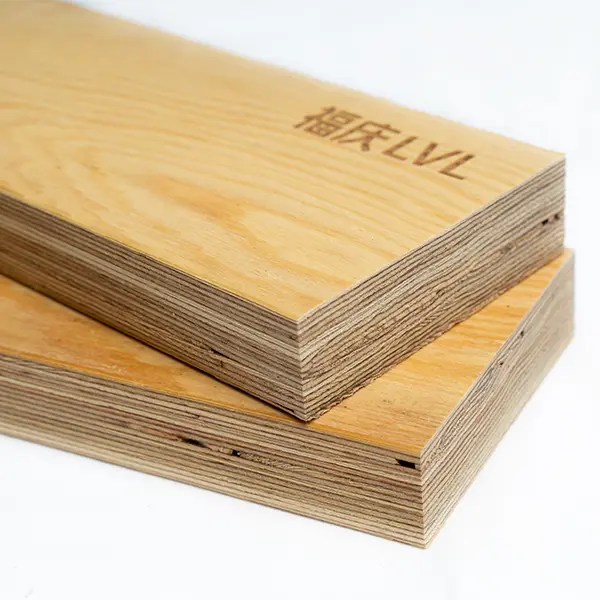
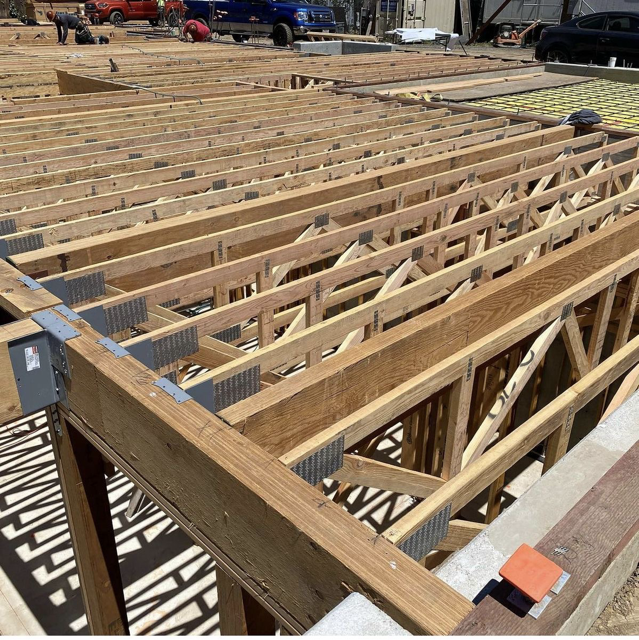
Laminated Veneer Lumber (LVL) is an engineered wood product made by stacking multiple thin wood veneers with their grains aligned in the same direction and bonding them with high-strength adhesives under heat and pressure. The manufacturing process creates a uniform, dense structural composite with highly predictable properties. LVL products are often used for floor joists, roof rafters, rim boards, and other structural elements. Because of its strength and stiffness, designers often choose LVL for primary structural beams where load capacity and deflection control are critical.
High strength-to-weight ratio: LVL is typically stronger and stiffer than many comparable solid wood members.
Dimensional stability: Because grain orientation is consistent and veneers are bonded tightly, LVL resists warping, twisting, and cupping.
Large spans: LVL is often used for long beams and headers where solid wood would be impractical.
Consistency: Engineered in a controlled environment, LVL generally delivers uniform mechanical properties.
Laminated Strand Lumber (LSL) is another engineered wood product made from longer wood strands, often flaked wood material, oriented in layers and bonded with adhesive under heat and pressure. Unlike LVL, where thin veneers are used, LSL uses larger wood strands, resulting in a product that fills a slightly different niche in performance and cost. LSL’s strength and stiffness are generally higher than solid sawn lumber of similar dimensions but typically lower compared to LVL.
Manufactured from wood strands: These are arranged to achieve consistent strength and reduced defects.
Lower stiffness than LVL: LSL tends to be less stiff than LVL but offers good general structural performance.
Cost-effective: Because larger strands and often mechanically simpler production methods are used, LSL can be more economical for certain uses.
Ideal for studs and non-primary beams: LSL is common in stud walls, headers, and some beam uses where extreme stiffness isn’t required.
To determine which is stronger, we need to compare their engineering properties, including bending strength, stiffness (modulus of elasticity), shear strength, and load capacity.
LVL: Known for higher bending strength. Because LVL veneer is aligned and bonded, the result is high uniform strength along the beam axis.
LSL: While strong compared to many solid wood alternatives, LSL typically has a lower bending strength than LVL due to its strand-based structure.
In most applications requiring maximum strength, especially in beams and headers, LVL is stronger than LSL.
LVL: Has a high modulus of elasticity, meaning it resists bending and deflection better under load.
LSL: Has good stiffness but is generally less stiff than LVL.
For long spans and heavy loads, LVL typically performs better as a structural beam.
In practical structural designs, load capacity matters more than isolated material properties. Both LVL and LSL can support structural loads, but LVL beams support higher continuous loads and longer spans with lower deflection. LSL beams are effective for moderate loads and shorter spans, particularly where cost and consistent stud performance are priorities. This has made LVL the preferred choice for primary structural members in floor systems, roof systems, and heavy framing. Meanwhile, LSL often appears in studs, general framing, and smaller beam roles.
LVL tends to be more expensive, reflecting its higher performance and manufacturing precision.
LSL is generally more cost-effective, making it ideal for load-bearing walls and secondary structures where ultimate strength isn’t the paramount requirement.
LVL production requires deeper veneer preparation and precise lamination to achieve high performance.
LSL production uses longer wood strands and simpler layering, offering good consistency at a lower cost.
LVL: Used where strength and stiffness cannot be compromised — beams, rim boards, headers, and long spans.
LSL: Used where dimensional stability and moderate strength suffice — studs, general framing, and non-critical beam roles.
The choice between LVL and LSL often balances performance requirements vs budget constraints.
Both LVL and LSL are engineered to perform better under moisture variations than solid lumber. However, LVL’s multiple veneers and stronger adhesives provide superior dimensional stability when exposed to humidity changes. LSL performs well but may be slightly more sensitive to prolonged moisture if not properly sealed or protected.
Both products make efficient use of wood resources: LVL uses thin veneers, enabling efficient use of raw logs; LSL uses wood strands, often from smaller timber offcuts, improving material use efficiency. From a sustainability perspective, both are preferable to large solid beams sourced from old-growth timber.
Floor joists and rim boards
Roof rafters and beams
Long-span structural headers
Stair stringers
Heavy load-bearing members
Stud wall framing
Non-primary floor beams
Shorter span headers
Load-bearing frames where extreme stiffness is not critical
The practical takeaway is that LVL beams are often chosen where structural performance is critical, while LSL is chosen for cost-sensitive applications with moderate loading requirements.
Engineered wood products like LVL and LSL are typically produced to meet specific building codes and structural design standards. It is essential to reference design tables, such as published bending stress, shear capacity, and allowable deflection, when specifying either product in a building. National and regional codes often include tables for both materials, reflecting their differences in strength and stiffness.
Engineers will design connections, fasteners, and load paths based on these published values to ensure safety and performance in residential and commercial structures.
| Aspect | LVL (Laminated Veneer Lumber) | LSL (Laminated Strand Lumber) |
| Bending Strength | Higher | Moderate |
| Stiffness (E Modulus) | Higher | Lower |
| Dimensional Stability | Excellent | Good |
| Span Capability | Long spans | Short to moderate spans |
| Cost | Higher | Lower |
| Typical Use | Heavy structural | Framing/moderate load |
| Load Performance | Very high | Moderate |
| Moisture Stability | Better | Slightly less |
| Best For | Beams, headers, joists | Studs, non-critical beams |
Both products have proven performance, but the engineered strength of LVL typically surpasses that of LSL in high-demand structural roles.
Choose LVL if:
You need long spans without support columns
Load capacity and stiffness are critical
You are framing heavy floors, roofs, or headers
Minimal deflection under load is required
Choose LSL if:
You are framing stud walls or short span members
You seek a cost-effective engineered solution
You need consistent dimensional profiles in repetitive framing
Structural loading is moderate and spans are short
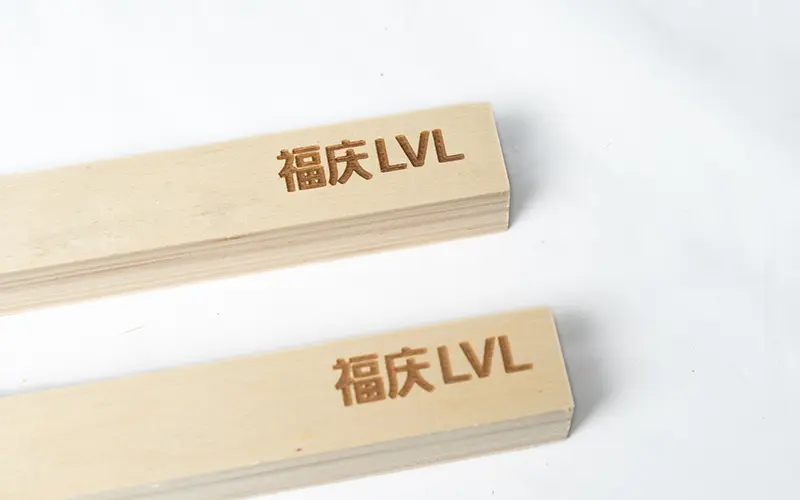
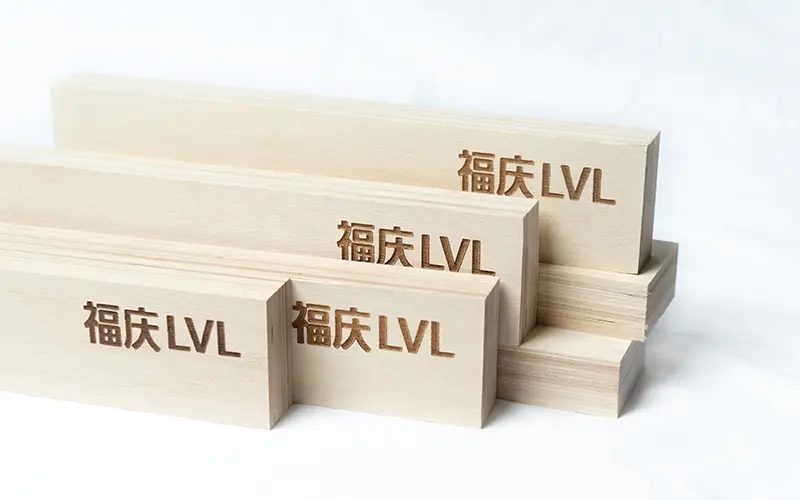
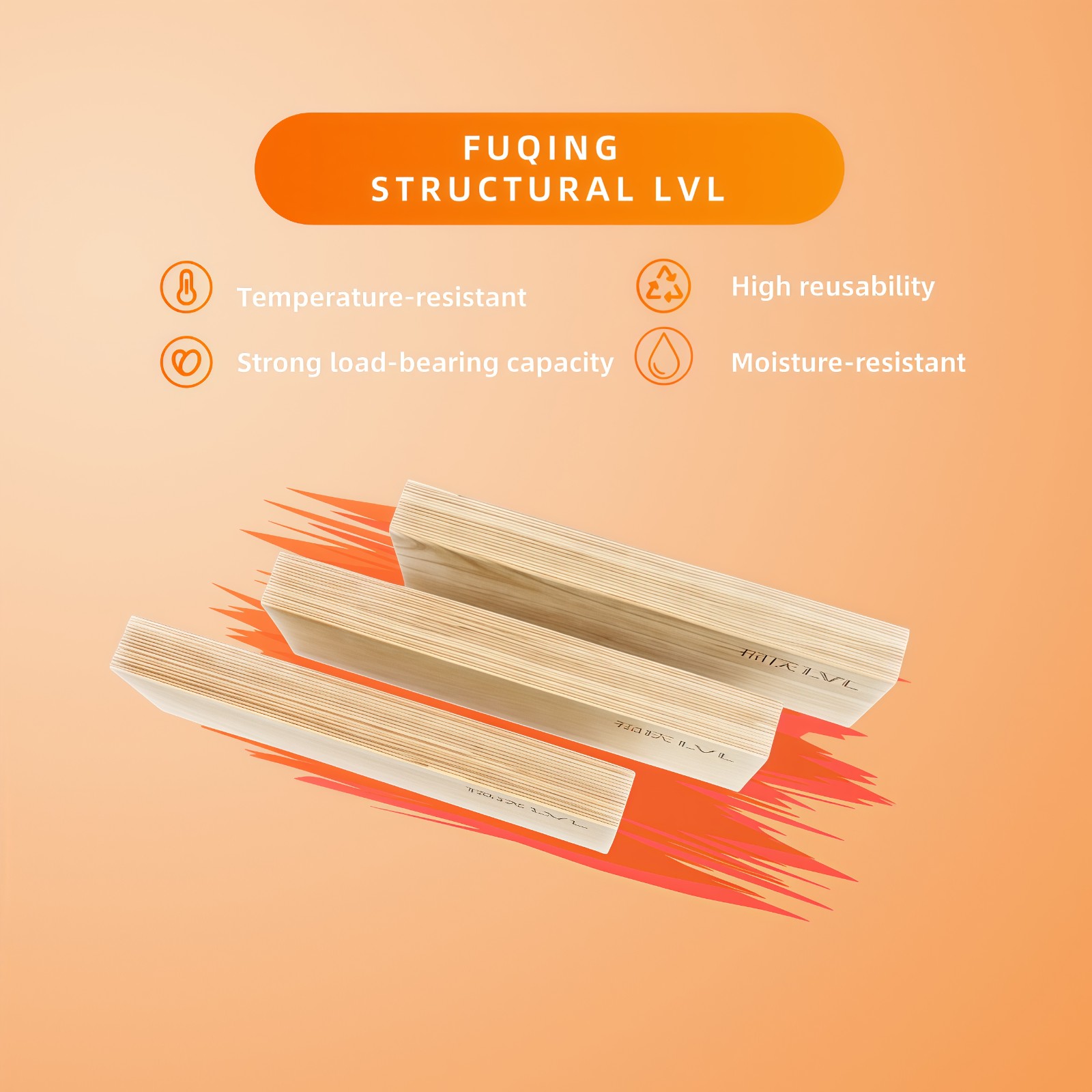
A practical example is structural LVL products from Fuqing, a global engineered wood manufacturer offering LVL beams tailored to structural needs. Fuqing’s LVL series, designed with controlled moisture content and high-performance adhesives, demonstrates the material’s strength and stability for floor systems, roof structures, and load-bearing applications.
Fuqing LVL products are engineered to meet global standards, providing reliable performance for builders and designers who need consistent, high-strength, engineered wood solutions. The LVL beams are ideal where performance and longevity are essential.
When comparing LVL vs LSL, LVL is generally the stronger and stiffer material, particularly for load-bearing and long-span structural applications. LSL, while still a capable engineered product, is typically better suited for moderate load conditions and repetitive framing uses where cost and consistency matter more than absolute strength.
Understanding these differences, along with application requirements, span conditions, loading scenarios, and budget, is essential when specifying engineered wood products. Choosing the right engineered lumber ensures a safer, more efficient, and longer-lasting structure whether you’re building a home, commercial space, or complex timber system.