EN
EN
 jp
jp  ko
ko 
In modern construction, builders often choose between LVL (Laminated Veneer Lumber) and dimensional lumber for framing, beams, and structural support. While traditional sawn lumber has been widely used for centuries, engineered wood products like LVL are increasingly replacing it in many structural applications. The main reason is strength and reliability. Engineered wood products are designed to provide higher load capacity, improved dimensional stability, and more consistent performance compared with traditional lumber.
Understanding the difference in strength between LVL and dimensional lumber can help builders choose the right material for beams, headers, floor systems, and other structural components.
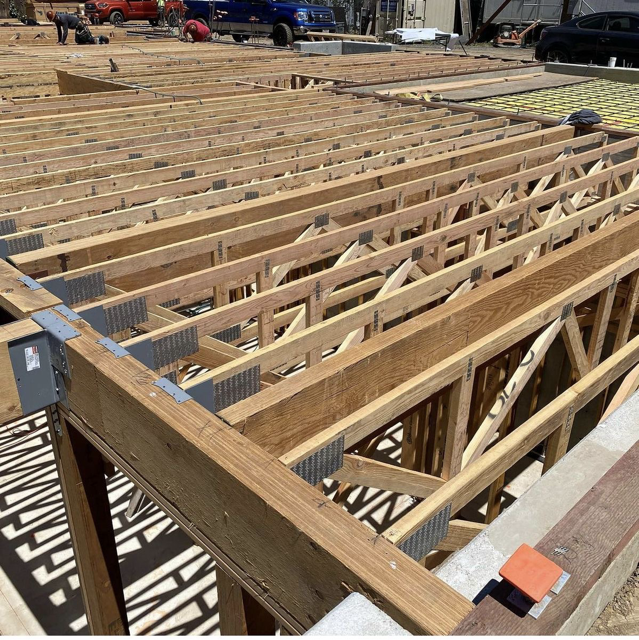
Dimensional lumber refers to solid wood boards cut directly from logs and processed into standard sizes, such as 2×4, 2×6, and 2×12. These boards are commonly used for wall framing, floor joists, roof rafters, deck framing, and general structural construction.
Dimensional lumber is typically produced from softwood species such as pine, spruce, or fir. While it is strong and widely available, its performance depends heavily on the natural characteristics of the wood, including grain orientation, knots, and moisture content. [1] Because wood is a natural material, each piece of dimensional lumber may behave differently under load. Some boards may warp, twist, or shrink over time due to changes in humidity or temperature. These variations are one of the main reasons engineered wood products such as LVL have become popular in modern structural design.
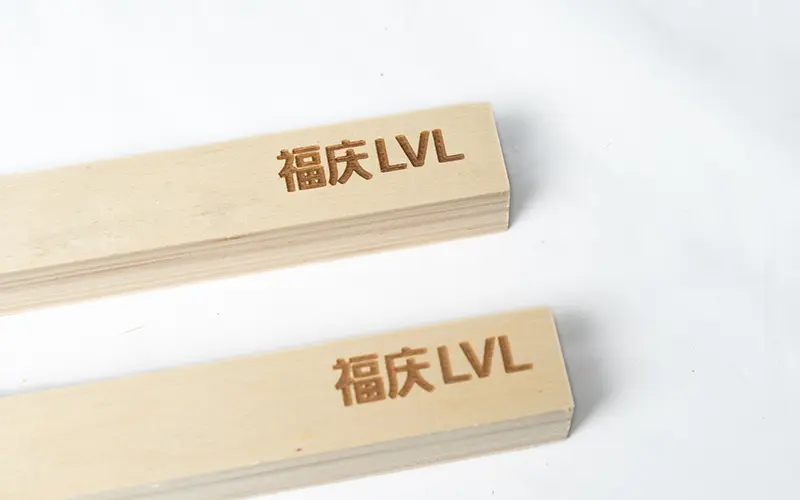
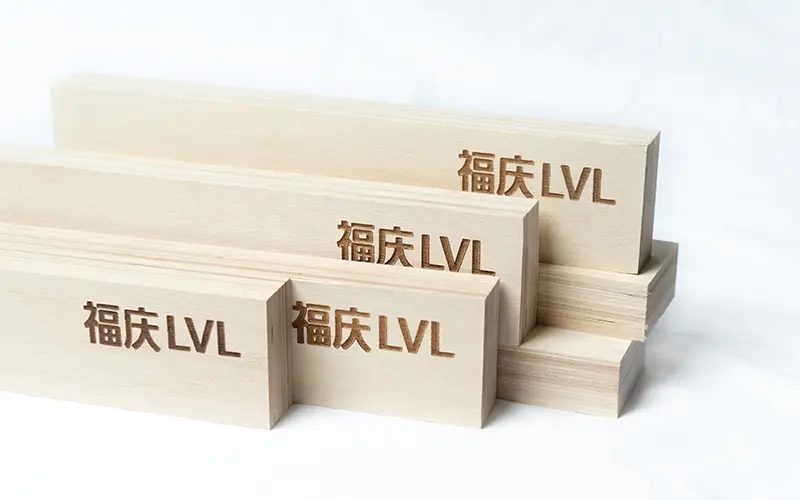
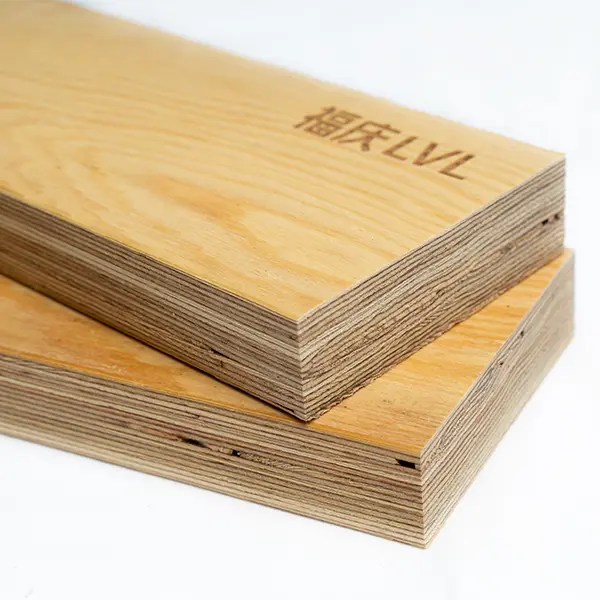
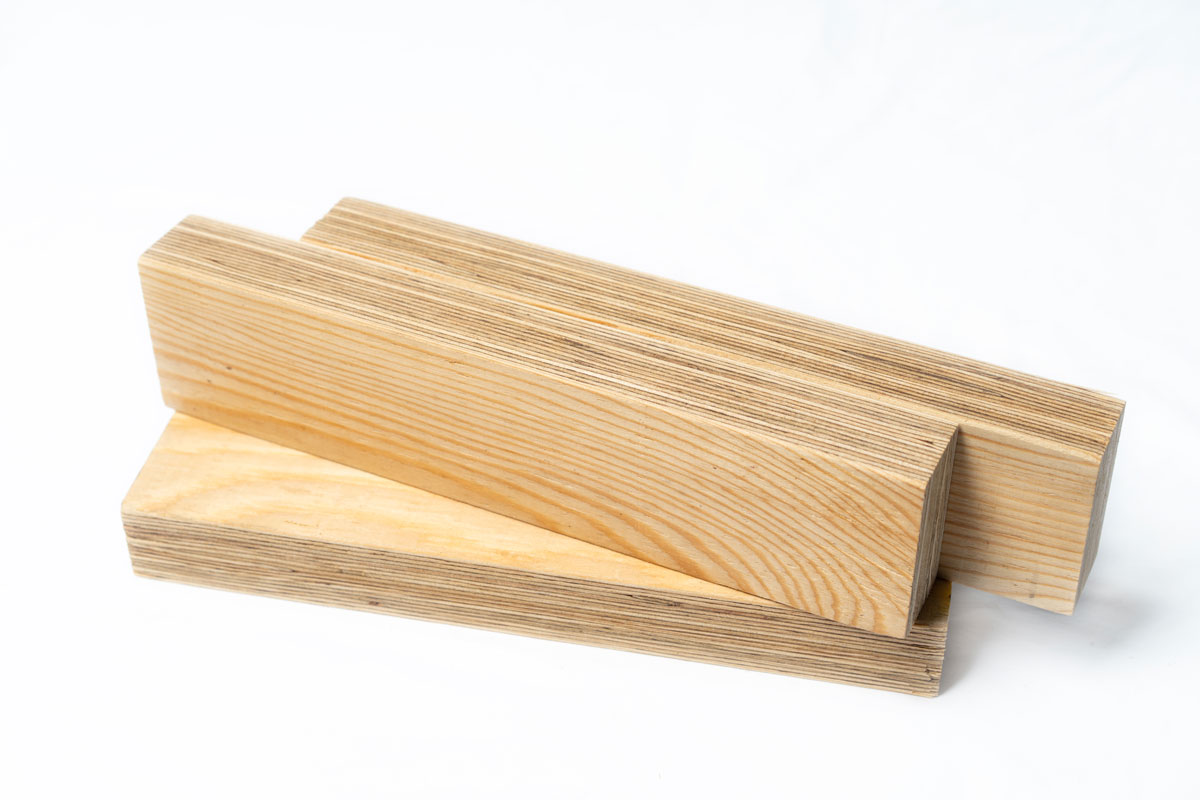
LVL is an engineered wood product manufactured by bonding multiple layers of thin wood veneers together using structural adhesives under heat and pressure. During manufacturing, the grain direction of each veneer layer is aligned in the same direction. This configuration maximizes strength along the length of the beam and allows the material to carry heavy loads efficiently.
Because LVL is produced in a controlled factory environment, it has several advantages compared with solid lumber:
Uniform strength properties
High load-bearing capacity
Improved dimensional stability
Reduced risk of warping or twisting
These characteristics make LVL particularly suitable for structural applications such as beams, headers, floor systems, and roof framing.
Fuqing Wood produce a wide range of LVL engineered wood products used in structural construction. The product range includes LVL beams, columns, scaffolding boards, and door components.
One of the most important differences between LVL and dimensional lumber is mechanical strength and structural performance.
Bending strength, also called modulus of rupture (MOR), measures how much load a beam can carry before breaking.
Typical values:
LVL bending strength: 44–60 MPa
Dimensional lumber bending strength: 30–45 MPa
This means LVL generally has significantly higher bending strength than standard solid wood lumber. [2] Because of this increased strength, LVL beams can often span longer distances without additional supports.
Stiffness determines how much a beam will bend under load.
Typical values:
LVL modulus of elasticity: 10,000–13,000 MPa
Solid lumber modulus of elasticity: 8,000–11,000 MPa
The higher stiffness of LVL means it deflects less under heavy loads, which is critical for floor beams and roof structures.
Compression strength measures the ability of a material to resist crushing forces. LVL generally performs better in compression due to its layered structure and adhesive bonding, which distributes stresses across the entire beam. [3] This property allows LVL beams to support heavy vertical loads in columns and structural supports.
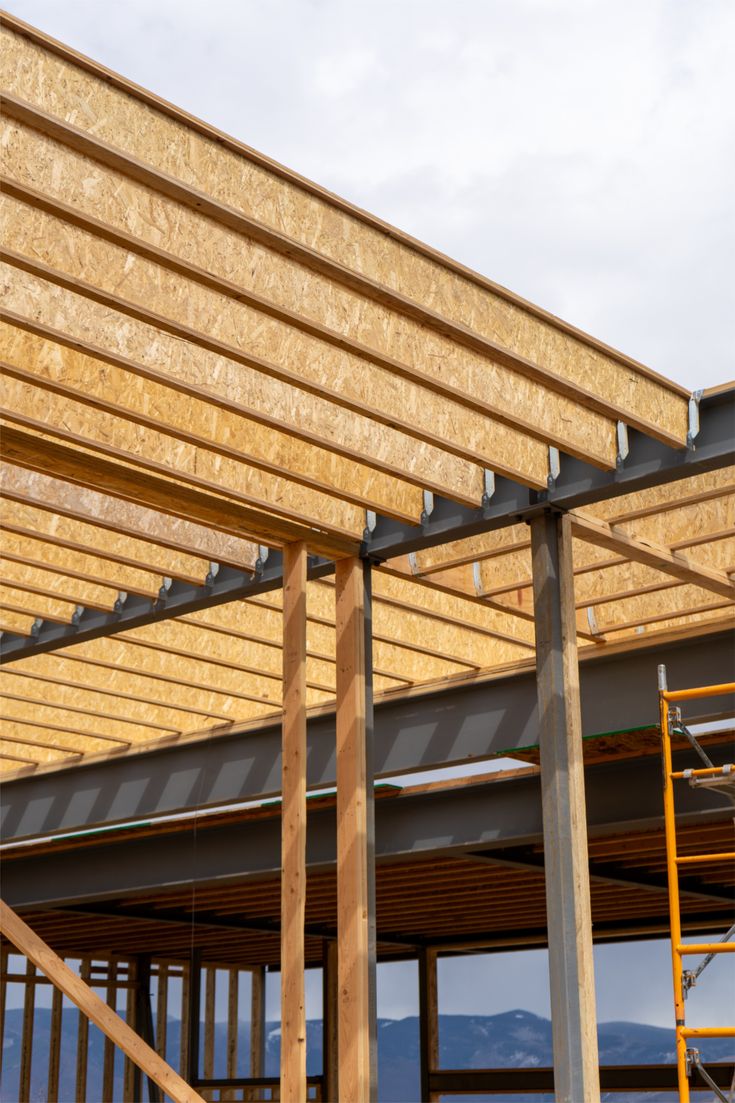
The combination of higher bending strength and stiffness allows LVL beams to support heavier loads and span longer distances. In some structural applications, LVL beams can span two to three times farther than comparable solid wood members while maintaining similar or greater strength. [4] This makes LVL ideal for large window and door headers, garage door headers, long-span floor beams and roof ridge beams.
Another major difference of LVL vs dimensional lumber strength is consistency.
Natural wood contains defects such as knots, grain irregularities, splits, and moisture variations. These defects can weaken structural performance and make it difficult to predict load capacity accurately. Two pieces of dimensional lumber may have very different strength properties even if they are the same size.
LVL is manufactured using thin veneers that are carefully graded and laminated together. This process distributes defects throughout the beam and creates a uniform structural material with predictable mechanical properties. Engineers prefer LVL for critical structural elements because it offers lower variability and higher reliability compared with natural lumber.
In addition to strength, dimensional stability is another important factor when comparing LVL and solid lumber.
Solid wood reacts to environmental changes such as humidity and temperature. As moisture levels change, boards may shrink, expand, warp, or twist. These movements can cause structural alignment issues in walls, floors, and roofs.
LVL beams are manufactured under controlled conditions and are far less likely to warp or shrink. The laminated structure and strong adhesive bonds help maintain shape and structural integrity even under changing environmental conditions. This stability is especially important in large structural beams where deformation could affect the entire building structure.
Another advantage of LVL over dimensional lumber is the ability to produce longer and larger structural members. Solid lumber beams are limited by the size of the tree they are cut from. In contrast, LVL beams can be manufactured in much longer lengths. This allows builders to create long-span beams, large structural headers, and continuous floor systems without requiring additional joints or support columns.
Although LVL offers superior strength and performance, it is generally more expensive than dimensional lumber.
However, LVL may reduce overall construction costs by:
Allowing longer spans
Reducing the number of support columns
Improving structural efficiency
Minimizing material waste
For many large construction projects, these advantages outweigh the higher initial cost.
While dimensional lumber is suitable for many standard framing applications, LVL is often preferred when structural performance is critical.
Common applications for LVL include:
Structural Beams: LVL beams are commonly used to support large loads in floor systems and roof structures.
Door and Window Headers: Large openings require strong beams to support loads above the opening.
Floor Systems: LVL is often used in combination with I-joists to support floor loads.
Roof Framing: Ridge beams and long-span rafters frequently use LVL for improved stiffness and stability.
Structural Columns: LVL columns provide strong vertical support in wood-frame construction.
| Feature | LVL | Dimensional Lumber |
| Strength | Higher | Moderate |
| Stiffness | Higher | Lower |
| Consistency | Uniform | Variable |
| Warp resistance | Excellent | Moderate |
| Span capability | Long spans | Shorter spans |
| Cost | Higher | Lower |
Overall, LVL provides greater strength, stiffness, and reliability than dimensional lumber, which is why it is commonly used for structural beams, headers, and load-bearing components.
Both LVL and dimensional lumber play important roles in construction, but they serve different purposes. Dimensional lumber remains a cost-effective solution for standard framing, while LVL is often preferred for structural applications requiring high strength and long spans. Because LVL is engineered from laminated wood veneers, it provides consistent mechanical properties, superior load capacity, and excellent dimensional stability compared with traditional solid timber.
Fuqing Wood produce high-quality LVL products designed to meet the demands of modern construction. Their engineered wood solutions help builders create stronger and more reliable structures using advanced wood technology.
Reference:
[1] https://timbercentral.com.au/lvl-vs-solid-timber-why-engineered-lumber-is-leading-the-way/
[2] https://tlpwood.com/laminated-veneer-lumber-uses/
[3] https://jeffclickhomes.com/lvl-construction-products-for-stronger-more-consistent-structural-builds/
[4] https://affiliated-lumber.com/the-difference-between-dimensional-lumber-and-engineered-lumber/