EN
EN
 jp
jp  ko
ko 
Engineered wood products have transformed the construction industry, providing builders and architects with stronger, more consistent, and more sustainable alternatives to traditional solid timber. Among these, Glulam (Glued Laminated Timber) and LVL (Laminated Veneer Lumber) stand out as two of the most widely used structural materials.
While both products are made by bonding layers of wood together under heat and pressure, their manufacturing methods, performance characteristics, and applications differ significantly. In this guide, we’ll explore Glulam vs LVL beams, comparing their composition, strength, uses, and cost, and help you decide which is best for your next construction project.
As one of leading engineered wood manufacturers, Fuqing provides high-quality LVL beams, plywood, and structural timber solutions trusted by builders worldwide. Understanding how LVL compares with Glulam can help customers make informed choices based on performance, durability, and budget.
Key Takeaways:
LVL is engineered for precision and performance, offering uniform strength and ease of use in residential and commercial framing.
Glulam is engineered for beauty and scale, perfect for long spans, curved beams, and exposed architectural designs.
Fuqing's engineered LVL beams are an affordable, high-quality solution trusted by global builders for structural consistency and sustainability.
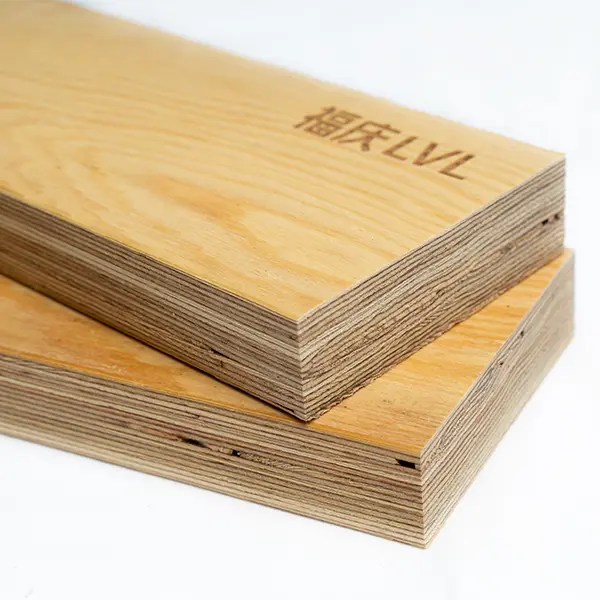
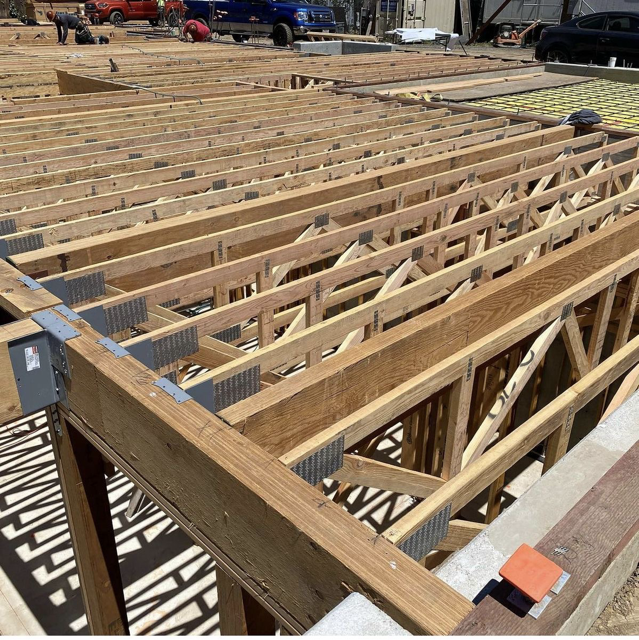
LVL (Laminated Veneer Lumber) is an engineered wood product created by bonding multiple thin layers of wood together with adhesives, with each layer’s grain running in the same direction. This parallel grain alignment gives LVL its exceptional tensile strength, dimensional stability, and uniform load-bearing performance.
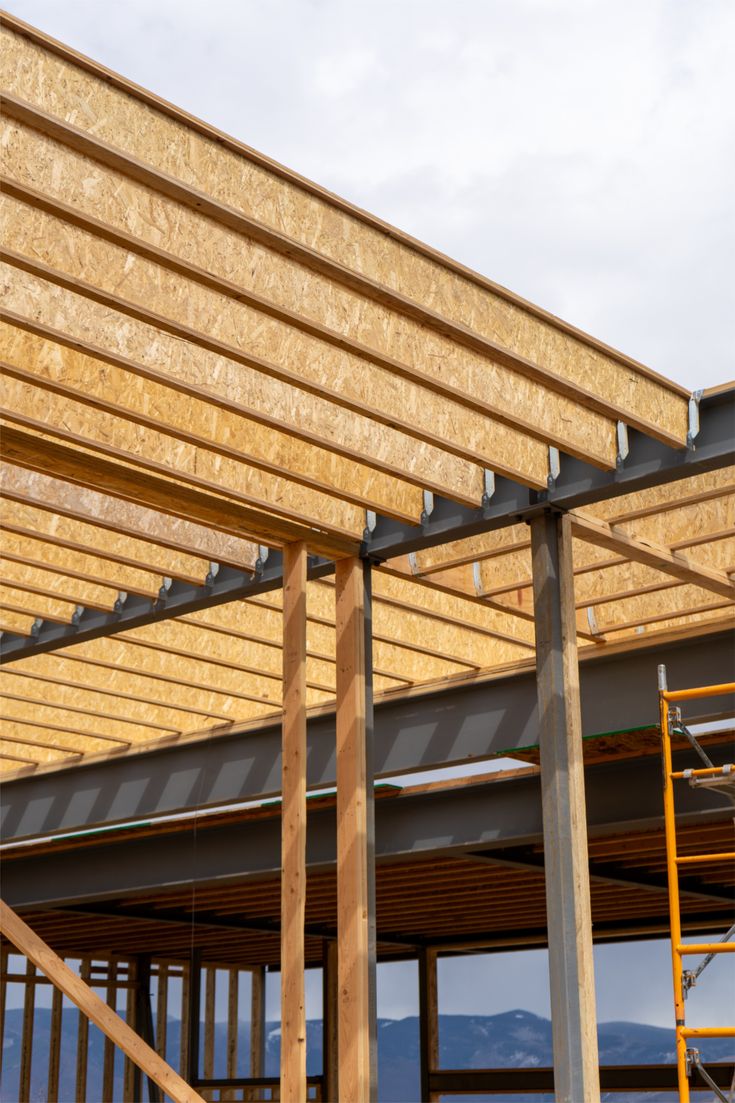
Unlike solid lumber, which can vary in quality due to natural defects, LVL offers predictable strength and performance. The manufacturing process minimizes knots, voids, and warping, resulting in a consistent, high-strength material suitable for structural applications such as beams and headers, floor and roof joists, rim boards, stair stringers, formwork and scaffolding planks. LVL is especially popular in residential and commercial construction for its excellent balance between cost, strength, and workability.
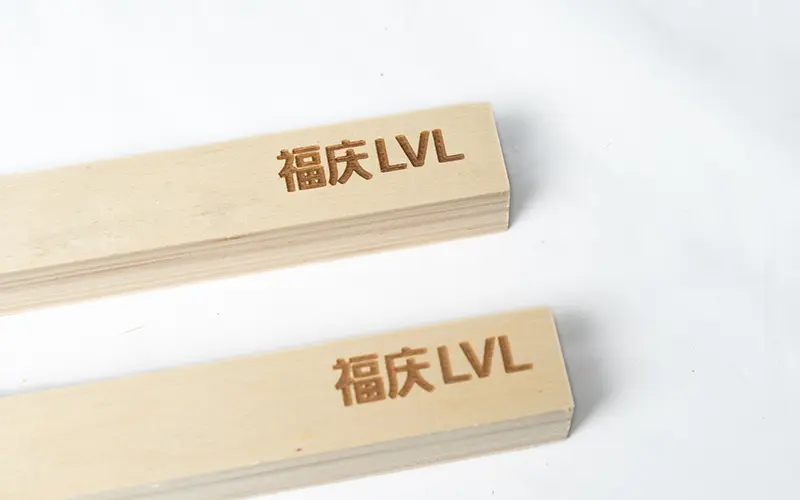
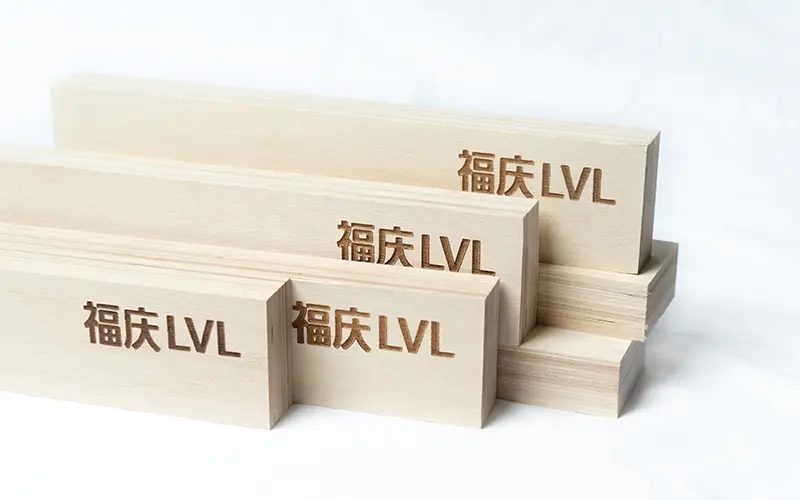
At Fuqing, the 15 LVL beam series is one of the company’s flagship products. Designed for structural reliability and consistent performance, these LVL beams are engineered to meet international standards for strength and moisture resistance, making them ideal for beams, trusses, and columns in modern buildings.
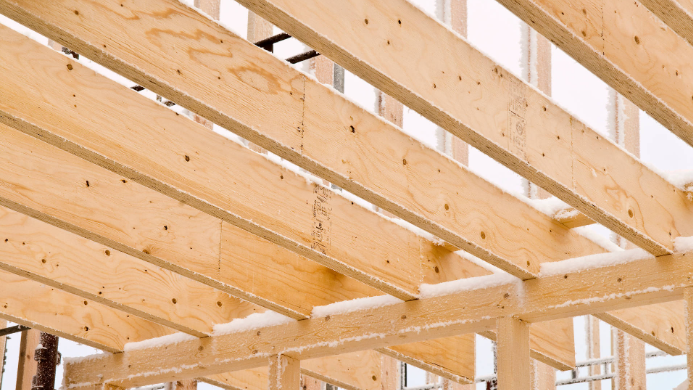
Glulam, short for Glued Laminated Timber, is another form of engineered wood created by gluing together multiple layers of dimensional lumber. Unlike LVL, which uses very thin layers, Glulam beams consist of thicker laminations, arranged with grains running parallel to the length of the beam.
This construction method gives Glulam an appearance closer to solid wood but with enhanced strength, stiffness, and flexibility. It can be manufactured in a variety of shapes, including curved, arched, or tapered beams, which makes it especially popular in architectural and decorative applications such as exposed structural beams in commercial or public buildings, roof trusses and arches, long-span bridges, auditoriums and sports facilities, timber curtain wall frameworks.
Glulam combines strength and beauty, making it both a structural and aesthetic choice in modern architecture. However, its manufacturing process and size customization typically make it more expensive than LVL.
Although both Glulam and LVL beam wood are engineered wood products, they are optimized for different structural needs. Both materials offer outstanding strength and sustainability, but the right choice depends on your design requirements, span, and whether aesthetics are a key consideration.
| Aspect | LVL | Glulam |
| Composition | Thin veneers glued with grains in the same direction | Thick lumber laminations glued together |
| Grain Orientation | Parallel throughout | Parallel, but can include special lamination patterns for shape or aesthetics |
| Strength | Excellent strength-to-weight ratio; uniform performance | Higher load-bearing capacity for larger spans |
| Size Availability | Limited to factory-pressed dimensions | Can be custom-manufactured in large or curved shapes |
| Moisture Resistance | Highly stable when treated; minimal warping | Durable when treated; can handle outdoor exposure better |
| Visual Appeal | Industrial appearance, usually concealed | Aesthetic and decorative, often left exposed |
| Typical Applications | Beams, joists, stair stringers, floor systems | Arches, large-span beams, decorative structures |
| Cost | Generally lower than Glulam | Higher due to thicker laminations and custom processing |
| Ease of Handling | Lighter and easier to cut or install | Heavier and requires more installation support |
| Manufacturing Process | Veneer lamination under heat and pressure | Lumber lamination with adhesives and pressing |
| Sustainability | Uses smaller-diameter logs efficiently | Uses larger timber pieces but still sustainable when FSC-certified |
Both Glulam and LVL are designed to overcome the limitations of natural timber while offering structural reliability and design versatility.
LVL Beams are used for their uniformity and precision, making them perfect for repetitive structural components such as floor joists, lintels, and truss chords.
Glulam Beams are chosen for architectural flexibility, as they can be shaped into curves or arches that are visually appealing while carrying heavy loads.
From high-rise buildings to residential homes, these engineered timber beams provide the strength of steel with the sustainability and warmth of wood.
When choosing between Glulam and LVL, consider your project’s size, structural needs, and aesthetic goals.
Choose LVL if you need:
Uniform, high-strength beams for framing, flooring, or trusses
Lighter and easier handling on-site
Cost-effective structural solutions
Precision and dimensional stability
Choose Glulam if you want:
Exposed structural beams that double as design features
Large or curved spans
Superior bending strength and visual appeal
A premium finish for public or architectural spaces
For example, in residential floor framing, LVL beams offer an excellent balance of strength and affordability. In contrast, Glulam beams shine in open-span architectural designs, such as atriums, halls, and bridges.
Both LVL and Glulam are environmentally friendly alternatives to steel or concrete. They use renewable timber resources and generate less carbon during production. However, LVL often uses smaller logs, making it more resource-efficient, while Glulam utilizes larger timber pieces to achieve long spans and visual quality.
Manufacturers like Fuqing emphasize sustainability through:
Efficient material usage in veneer lamination
Low formaldehyde adhesives meeting global standards
Recycling of offcuts and residues in production
Compliance with international environmental certifications
This commitment allows builders to use engineered timber products confidently while meeting green building requirements.
Cost is often a decisive factor. Generally, LVL beams are more affordable because they are produced from thin veneers that can be pressed in bulk. Glulam beams, due to their thicker laminations and customized dimensions, come at a higher price point. However, Glulam cost can be justified in architectural projects where aesthetics and long-span capability are required. LVL, on the other hand, provides consistent performance at a lower cost, making it ideal for volume-based structural construction.
Both Glulam and LVL represent the best of modern engineered wood technology, strong, stable, sustainable, and adaptable. While LVL has uniform strength and cost efficiency for structural framing, Glulam stands out for its architectural beauty and load-bearing capacity across large spans.
For builders seeking reliability, precision, and high-performance materials, LVL beams are a practical choice. Companies supply premium structural LVL beams crafted with cutting-edge lamination processes and quality assurance systems, ensuring each product meets international standards.
Whether you’re constructing a home, commercial building, or architectural landmark, understanding the differences between Glulam and LVL allows you to choose the right engineered timber beam for strength, sustainability, and long-term value.