EN
EN
 jp
jp  ko
ko 
In modern construction, selecting the right structural material plays a major role in determining safety, durability, and cost efficiency. Among engineered wood products, LVL building material has emerged as a reliable alternative to traditional solid timber beams and columns. Its engineered properties, coupled with advanced manufacturing and global availability, make LVL an increasingly popular choice for residential, commercial, and industrial structures.
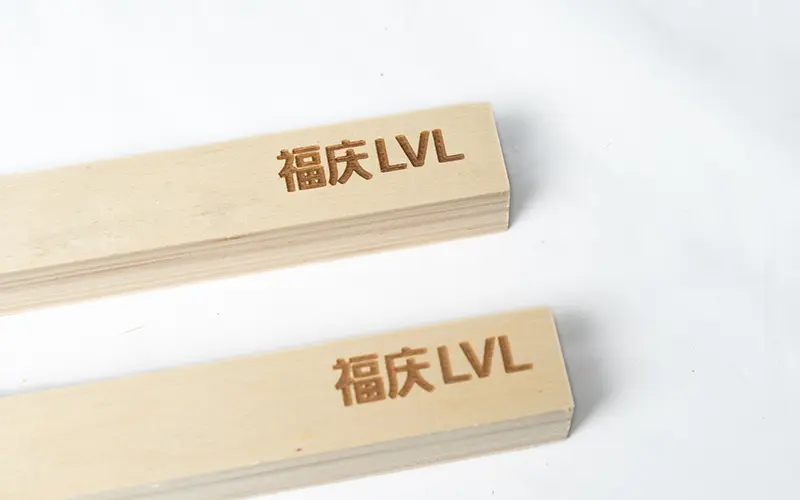
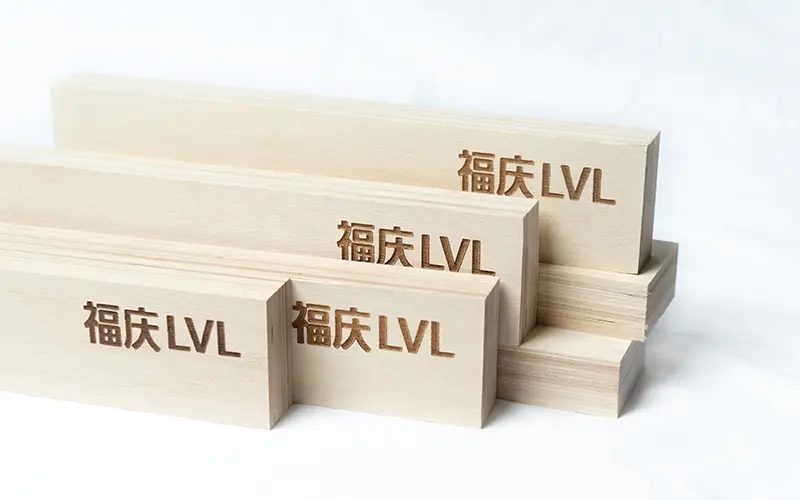
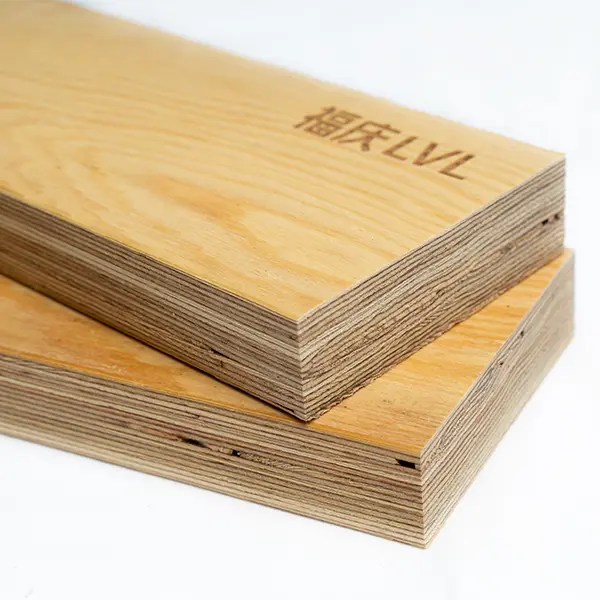
Laminated Veneer Lumber (LVL) is an engineered wood product made by stacking multiple thin wood veneers and bonding them together with high-performance adhesives under heat and pressure. The veneers are aligned in the same direction, parallel to the length of the beam, which maximizes strength and stiffness along the primary load-bearing axis.
This engineered configuration eliminates many of the inconsistencies found in natural lumber, such as knots, checks, and grain variation. As a result, LVL delivers predictable structural properties, allowing engineers to design with confidence across a range of applications.
The manufacturing process of LVL building material involves several precise steps:
Log Selection and Veneer Production
Select high-quality logs from fast-growing species. These logs are rotary peeled or sliced into thin wood veneers, often between 2–4 mm thick, depending on design specifications.
Drying and Grading
The veneers are dried to a controlled moisture content and graded for strength and quality, removing weak or defective pieces.
Adhesive Application
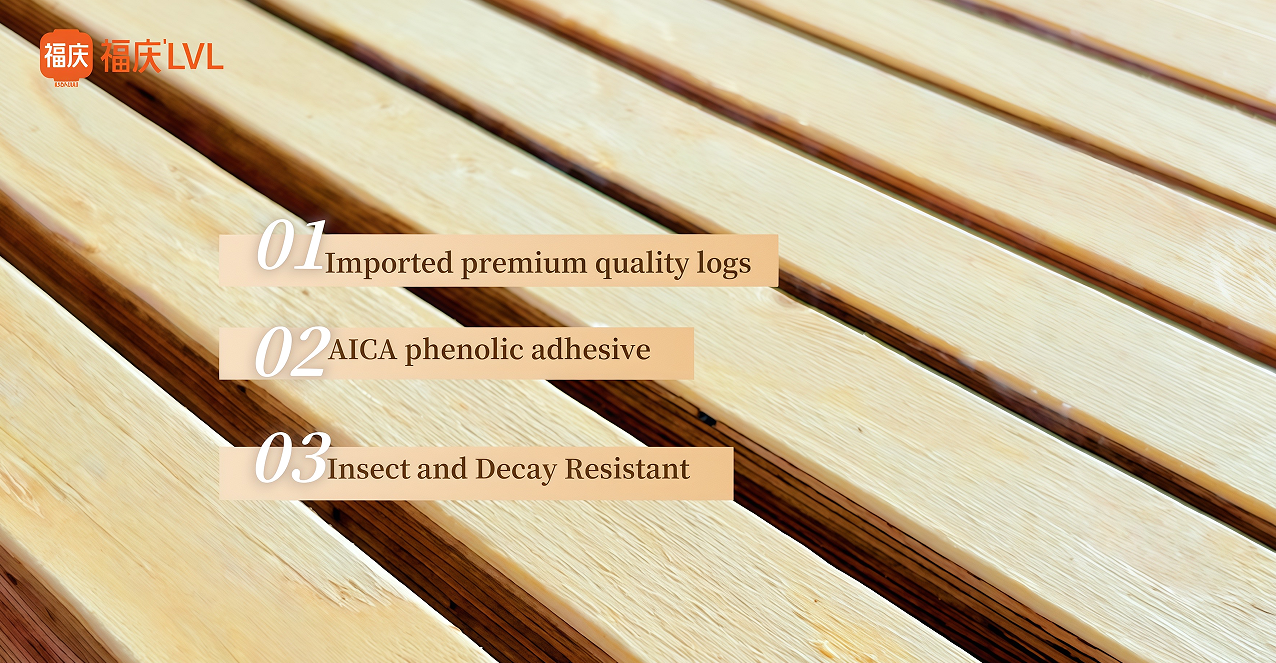
A structural adhesive (often phenol-formaldehyde or melamine-phenol resins) is applied to each veneer layer. These adhesives are chosen for durability, moisture resistance, and long-term performance.
Lay-up and Pressing
Veneers are stacked with grains aligned in the same direction, then pressed under heat and pressure to cure the adhesive. This produces a dense, uniform structural member.
Finishing and Quality Control
The cured LVL sections are planed to precise dimensions and undergo rigorous quality inspection and performance testing.
This controlled process ensures that LVL beams offer consistent strength, high stiffness, and dependable performance across batches — a key advantage in structural design.
LVL’s aligned veneer structure provides exceptional bending and load-carrying capacity. It performs consistently under both tension and compression, making it ideal for beams, headers, and load-bearing columns.
Unlike solid lumber, LVL demonstrates minimal warping, twisting, or shrinkage. Under variable humidity and temperature, LVL retains shape and performance, contributing to long-lasting structural integrity.
Manufactured under controlled conditions with graded veneers and adhesives, LVL delivers uniform mechanical properties. Designers can use published design tables and manufacturer data confidently in structural calculations.
LVL leverages thinner veneers and fast-grown logs efficiently, reducing dependency on large solid timber. It aligns with sustainable forestry practices and reduces waste.
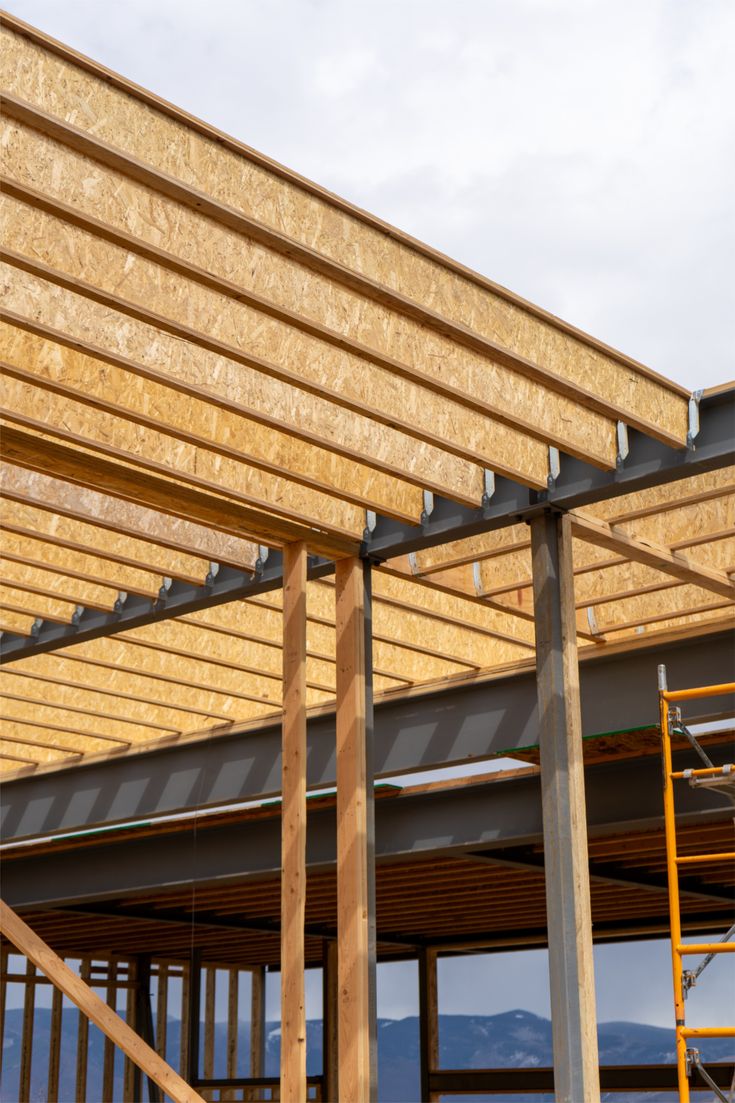
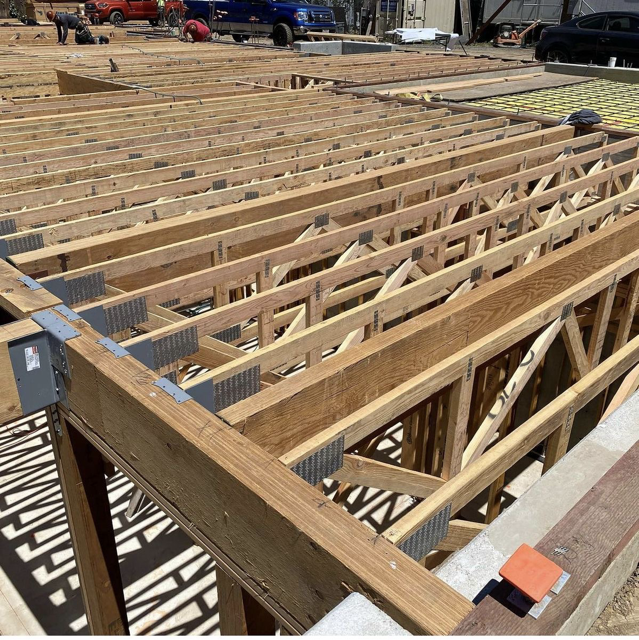
LVL integrates seamlessly with engineered products such as OSB I-Joists, LVL columns, and structural plywood, making it a versatile solution across floor, wall, and roof framing.
LVL beams are frequently used as primary structural members to support floors and roofs. Their high modulus of elasticity and predictable performance make them ideal for longer spans, where solid timber may require joints or additional supports.
In areas with large window and door openings, LVL headers provide the strength needed to transfer loads around unpredictable voids without risking structural weakness.
LVL boards are often used as perimeter rim joists or rim boards in floor systems because of their consistent strength and dimensional accuracy.
LVL can be used in roof trusses, ridge beams, and support members where stiffness and load distribution are essential.
In post-and-beam or hybrid wood framing systems, LVL columns offer reliable, straight support for multi-story applications.
Because LVL can be precisely engineered, it often outperforms solid lumber in critical structural scenarios, especially in long spans, high loads, or precision-demanding applications. LVL building material offers several distinct advantages:
| Feature | LVL | Solid Timber |
| Strength Consistency | High | Variable due to knots and grain |
| Dimensional Stability | Excellent | Moderate |
| Span Capability | Longer spans without sagging | Limited by log size |
| Defect Control | Manufactured, defect-free | Natural defects possible |
| Load Bearing | Predictable & certified | Variable |
| Sustainability | Efficient use of wood | Requires larger trees |
Builders today rarely rely on a single material. Instead, engineered wood systems combine multiple components for optimized performance. The combinations yield reliable, predictable, and efficient building systems that outperform traditional stick framing in many scenarios. LVL interacts effectively with:
Engineered wood I-joist is designed for efficient floor and roof framing, pairing well with LVL beams to create stable and lightweight structures with fewer supports.
Plywood offers shear strength and diaphragm action in floor and wall assemblies, complementing LVL’s bending and axial load capacity.
For architectural or heavy structural applications, glulam beams and LVL can work together to provide both strength and aesthetic quality.
Architects and engineers prefer LVL because it enables longer spans and open floor plans without relying on bulky structural supports.
Though engineered wood products may cost more upfront than plain dimensional lumber, their performance and reduced installation complexity often save time and money over the life of the building.
LVL production makes efficient use of smaller trees and timber byproducts, reducing waste and harvesting pressure on older forests.
Pre-manufactured, consistent products lead to fewer cuts and less material wasted during construction.
LVL is widely recognized in building codes and structural design standards, meaning engineers can confidently specify it in structural calculations.
Fuqing’s engineered wood products include a broad range of LVL beams designed for building applications:
E10–E16 Structural LVL: engineered for consistent strength and stiffness across multiple species such as radiata pine, larch, and eucalyptus.
LVL beam lengths up to 12 meters: providing long, continuous members without the need for splices or joints in many applications.
Moisture-controlled production: ensuring stable dimensions and reduced movement after installation.
These products are built to meet international structural standards and provide reliable performance in residential, commercial, and industrial settings. Fuqing’s catalog highlights manufacturing tolerances, adhesive types, and performance testing that support structural design and code compliance.
When incorporating LVL into a project, consider the following:
Select LVL grades and dimensions based on engineering calculations for intended load and span conditions.
While LVL performs well in controlled environments, in exterior or high-humidity locations ensure appropriate finishes or protective layers.
When LVL beams support engineered I-joists or floor systems, coordination between members enhances overall performance.
Use manufacturer-recommended fasteners and connection details to preserve structural integrity and avoid damage to engineered layers.
LVL building material has become an essential part of modern structural timber design due to its engineered strength, dimensional stability