EN
EN
 jp
jp  ko
ko 
In modern construction, strength, stability, and efficiency are key drivers of material selection. Among the many innovations in engineered timber, engineered wood joists, particularly manufactured I-joists, stand out as one of the most efficient framing solutions available today. They combine lightweight design, high load capacity, and superior dimensional stability to outperform traditional solid-sawn timber.
Engineered wood joists are structural members made by bonding together layers or strands of wood with advanced adhesives to form a composite product. Unlike solid timber, these joists are designed to distribute loads efficiently and minimize common issues like warping, twisting, and shrinkage.
An engineered joist typically consists of two main components:
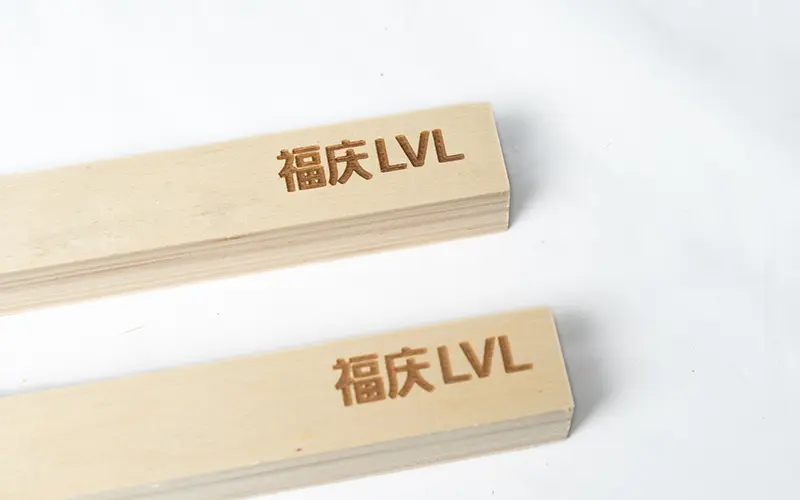
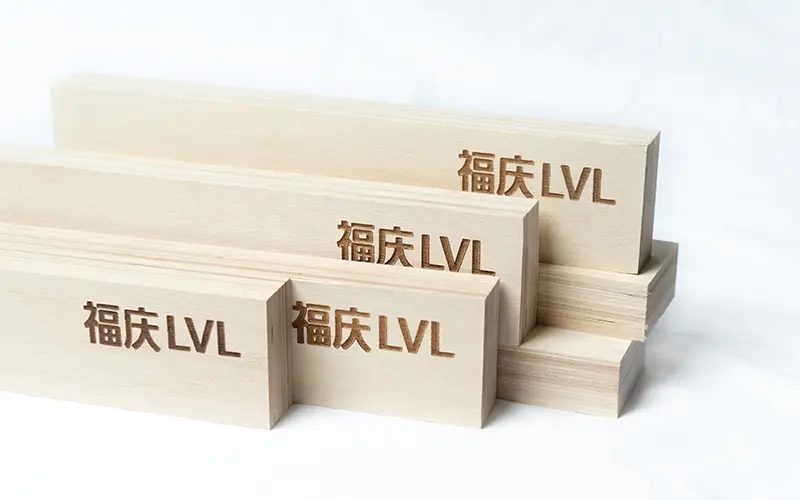
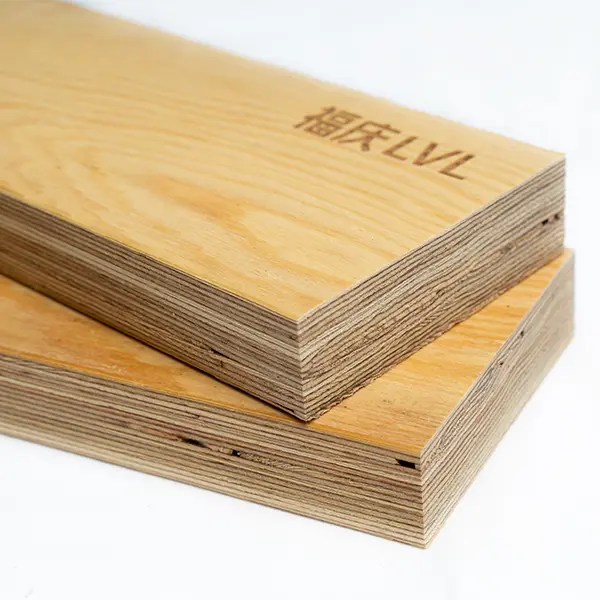
Flanges (top and bottom): often made from laminated veneer lumber (LVL) or solid lumber.
Web (center section): commonly made from oriented strand board (OSB) or plywood, depending on the design.
This unique “I” shape gives them the name I-joists, referencing their resemblance to the letter “I” in cross-section. The flanges carry most of the bending stress, while the web resists shear forces, resulting in a strong, lightweight structural member ideal for floors, roofs, and ceilings.
There are several types of engineered joists used in modern construction, each designed for different performance and cost requirements.
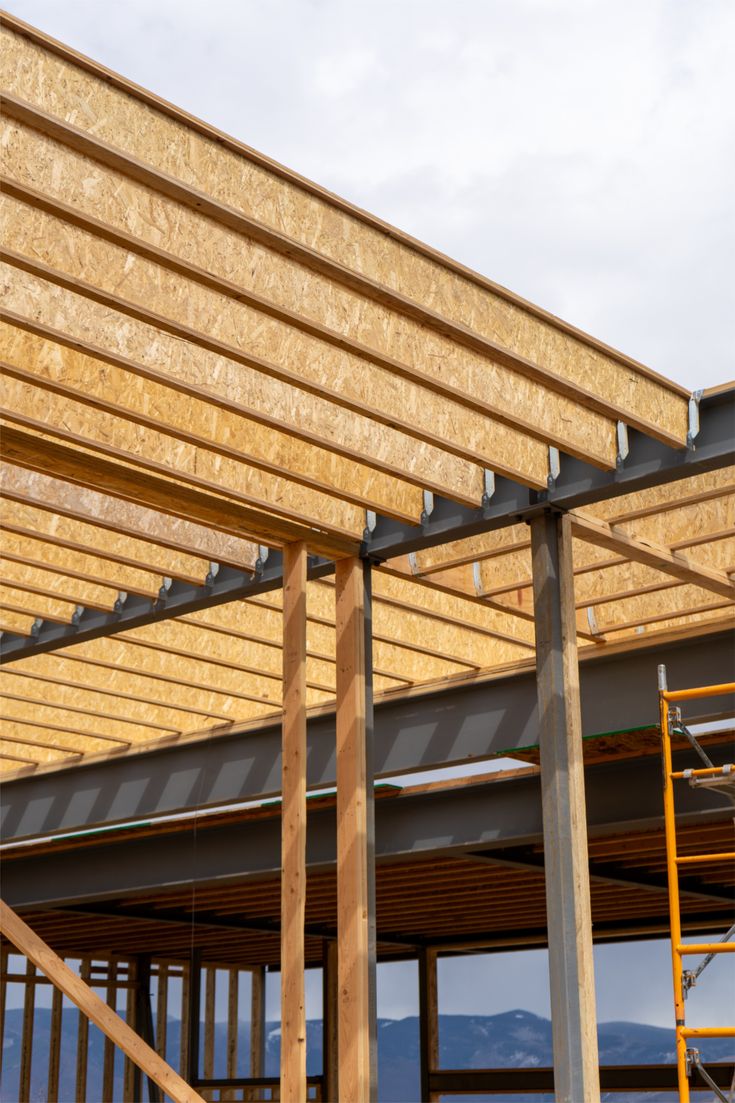
OSB I-joists use oriented strand board webs combined with LVL or solid timber flanges. They offer excellent strength-to-weight ratios and superior dimensional stability. Fuqing’s OSB joists are engineered for high structural integrity and long-span applications, making them suitable for both residential and commercial buildings.
Key advantages of OSB I-joists include:
Consistent quality with fewer natural defects.
Excellent resistance to bowing and twisting.
Easier installation and lighter weight than solid wood beams.
Environmentally efficient use of wood fibers and adhesives.
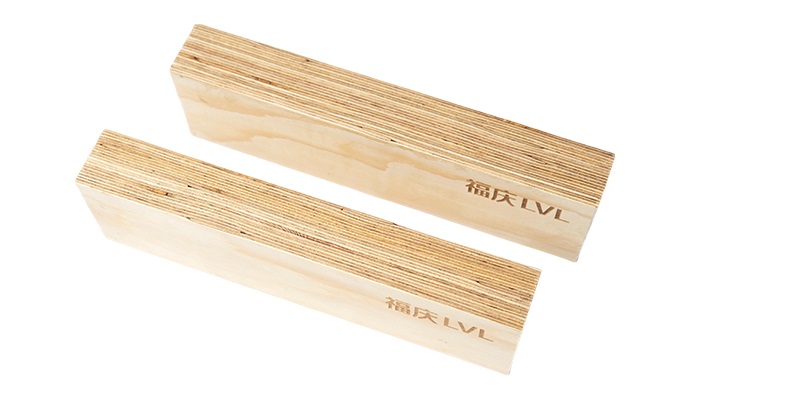
LVL (Laminated Veneer Lumber) joists have webs and flanges made from thin layers of wood veneer bonded under heat and pressure. They offer slightly higher strength than OSB I-joists but are typically more expensive. LVL joists are ideal for heavy-load areas or long-span floors where maximum stiffness is required.
Although once popular, plywood I-joists are less common today due to the dominance of OSB. Plywood webs offer good strength but may vary in quality and cost.
Hybrid joists combine different materials for optimized performance, for example, LVL flanges with OSB webs. Fuqing utilizes this approach in its engineered product lines, ensuring durability and efficiency across diverse applications.
Traditional sawn timber joists, while strong and familiar, have limitations. They are prone to natural inconsistencies such as knots, splits, and dimensional movement due to humidity. Manufactured I-joists overcome these issues through controlled engineering and precision manufacturing. Manufactured I-joists deliver consistent quality, efficiency, and long-term reliability, outperforming solid timber in both residential and commercial applications.
| Feature | Manufactured I-Joists | Solid Timber Joists |
| Material Composition | Engineered OSB web + LVL/solid wood flanges | Solid sawn wood |
| Weight | Lightweight and easy to handle | Heavier |
| Strength | High strength-to-weight ratio | Variable strength, depends on grain and defects |
| Dimensional Stability | Excellent, minimal shrinkage, warping, or twisting | May shrink, warp, or cup over time |
| Span Capacity | Longer spans with less material | Limited span |
| Cost Efficiency | Higher initial cost, lower long-term maintenance | Lower upfront cost but more waste |
| Environmental Impact | Sustainable use of wood fibers | Greater raw wood consumption |
Engineered wood joists are designed to maximize strength while minimizing material waste. Their I-shaped geometry allows them to carry loads efficiently:
Flanges resist bending stresses, maintaining beam stiffness.
Webs resist shear stresses between the flanges.
The combination provides excellent span-to-weight efficiency, allowing fewer supports and larger open floor areas.
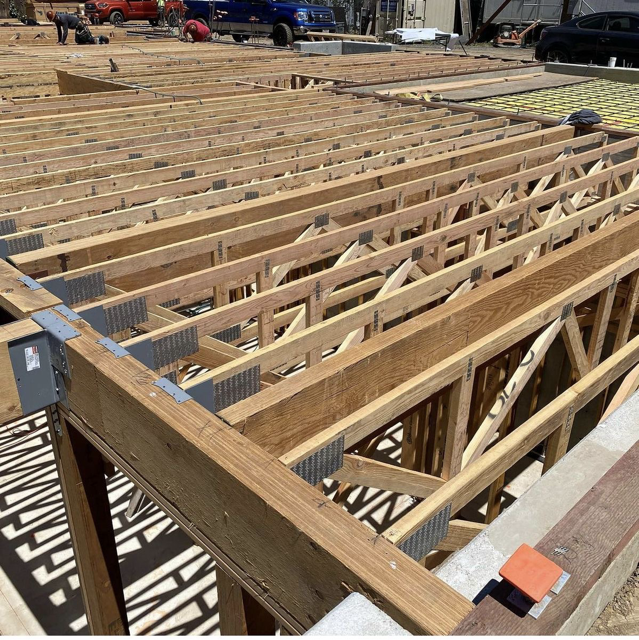
In modern construction, I-joists are used for floor systems to achieve flat, stable, and squeak-free surfaces, roof systems for long-span, lightweight roof framing, and ceilings and mezzanines providing consistent load-bearing performance. Because of their precision, I-joists also reduce on-site waste and simplify installation, saving both time and labor.
Engineered joists are manufactured under strict quality control to ensure uniform performance. Fuqing’s OSB I-Joists undergo multiple stages of testing, including load testing for bending and shear strength, dimensional stability evaluation under moisture and temperature changes, and adhesive performance testing to confirm long-term bonding reliability. These tests ensure that Fuqing’s I-joists meet or exceed international standards for structural performance and safety.
Engineered I-joists, particularly those made with OSB, offer a range of benefits that make them ideal for modern building systems.
OSB I-joists are much lighter than solid wood beams of equivalent strength. This makes them easier to transport, position, and install, especially on multi-level construction projects.
Thanks to their optimized structure, OSB I-joists can span longer distances without additional support beams. This provides architects and engineers with greater design flexibility while reducing framing costs.
Unlike sawn lumber, which expands or contracts with humidity, OSB I-joists retain their shape.
Engineered wood products use smaller, fast-growing timber species, reducing deforestation pressure on old-growth forests. OSB panels utilize wood strands efficiently, minimizing waste.
OSB I-joists integrate easily with prefabricated panels, modular construction, and LVL-based framing systems. Their precision dimensions make them suitable for large-scale production and automated installation.
Engineered joists can be used in nearly every structural application where load-bearing performance is needed. Common uses include:
Residential flooring: creating level, stable, and squeak-free floors.
Commercial construction: large spans with fewer intermediate supports.
Roof trusses: lightweight but strong structural members.
Ceilings and mezzanines: excellent for distributing loads evenly.
Decking systems: durable and moisture-resistant under treated conditions.
As a leading Chinese manufacturer of engineered wood products, Fuqing offers a full range of LVL and I-joist solutions designed for durability and efficiency.
Fuqing’s OSB I-joists are manufactured with precision bonding techniques and high-performance adhesives, ensuring superior strength and long-term durability.
All products comply with strict structural standards and undergo performance testing to meet the requirements of global building codes.
Fuqing offers custom lengths, depths, and flange materials for tailored construction needs whether for residential, commercial, or industrial use.
By utilizing renewable timber and efficient wood processing methods, Fuqing ensures that its products contribute to sustainable building practices.
With a robust global logistics system, Fuqing supplies OSB I-joists and engineered LVL beams to clients across Europe, Asia, Australia, and North America, supporting a wide range of construction sectors.
Engineered wood joists have revolutionized the way buildings are framed. Their superior strength-to-weight ratio, consistent quality, and environmental efficiency make them the preferred choice for modern builders seeking durable, lightweight, and sustainable solutions.
Fuqing, with its advanced I-joist technology and global expertise, continues to lead the industry in providing reliable, high-performance engineered timber systems for flooring, roofing, and structural framing. For architects, contractors, and distributors seeking high-quality engineered wood products, Fuqing’s I-Joists offer the perfect balance of strength, precision, and sustainability, engineered for the future of construction.