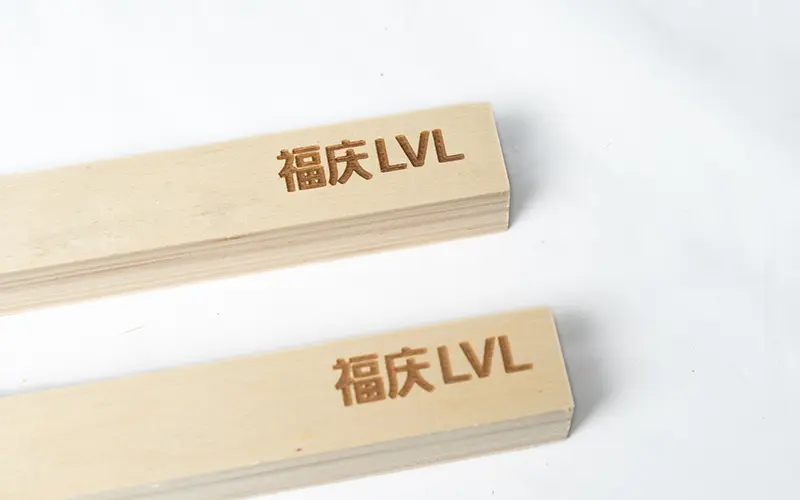
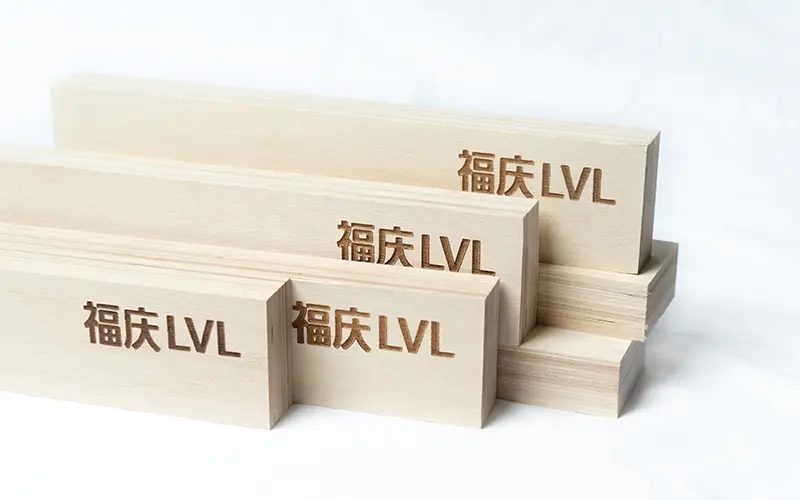
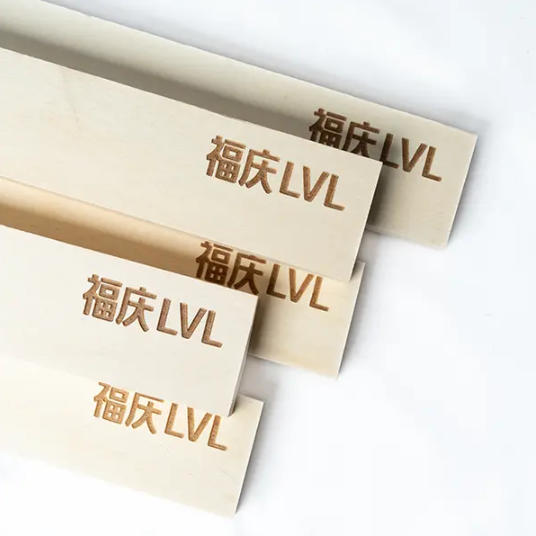
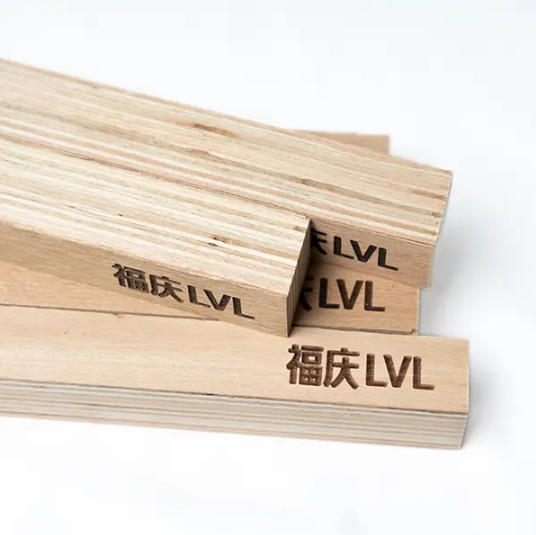
Laminated Veneer Lumber (LVL) is a widely used engineered wood product known for its strength, dimensional stability, and predictable structural performance. In modern construction, different types of LVL are developed to meet varying engineering and architectural requirements. These variations are typically classified by veneer orientation, application usage, and their relationship to other structural composite lumber (SCL) products.
Manufacturers such as Fuqing Wood, a professional engineered wood supplier, provide LVL solutions designed for structural applications including beams, framing systems, and scaffold components, supporting global construction and industrial markets.
Understanding these classifications helps engineers select the most suitable LVL type for load-bearing performance, safety, and construction efficiency.
What Is LVL and Why Its Types Matter?
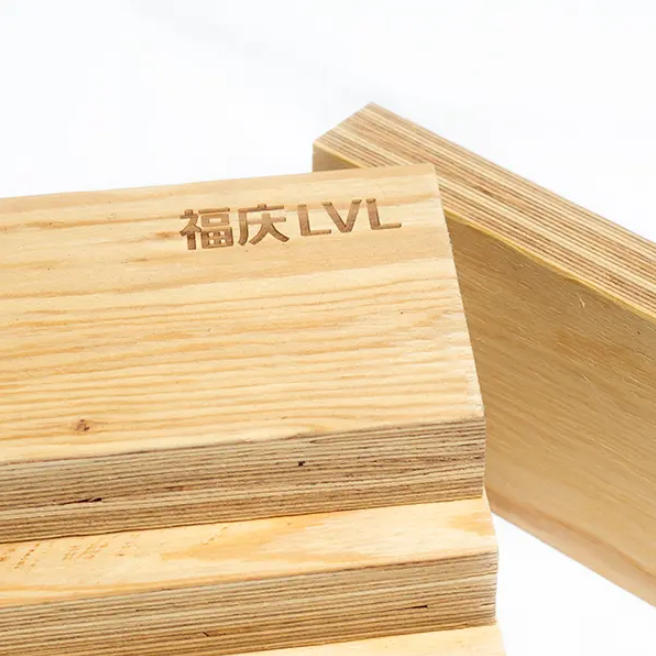
LVL is manufactured by bonding multiple layers of thin wood veneers under heat and pressure. The grain of each layer is typically aligned in the same direction, which significantly improves strength and stiffness compared with solid wood.
Key characteristics include:
Engineered from multiple wood veneer layers
High strength-to-weight ratio
Reduced defects such as knots and cracks
Stable performance under structural loads
Suitable for long-span applications
Different types of LVL exist because construction projects require different combinations of strength, stability, and flexibility. For example, Fuqing LVL products are designed with consistent manufacturing standards to ensure reliable performance across structural applications.
Categorization by Veneer Orientation
The most important classification of LVL is based on how the veneers are arranged. This directly affects structural behavior under load.
LVL-S (Parallel Orientation)
All veneers are aligned in the same direction
Maximum bending strength and load capacity
Ideal for beams, headers, and long-span structures
Common in primary structural framing
LVL-X (Cross-Banded)
Some veneers are placed at a 90-degree angle
Improved dimensional stability across width
Reduced risk of splitting and deformation
Suitable for applications requiring balanced strength
LVL-G
Formed by gluing LVL panels in a flatwise structure
Designed for heavy-duty load-bearing components
Commonly used in columns and bracing systems
Provides enhanced structural capacity
These orientation-based types allow engineers to match LVL performance with specific structural stress conditions.
Categorization by Application
Another major classification of types of LVL is based on how the material is used in construction projects.
Beams and Headers
Used for long-span structural support
Replace traditional solid wood beams
Enable open-space architectural designs
Widely used in residential and commercial buildings
Floor and Roof Trusses
Used in rafters, purlins, and roof framing systems
Provide strong resistance to warping and twisting
Ensure stable load distribution
Improve structural reliability in roofing systems
I-Joist Flanges
LVL used as top and bottom flanges in I-joists
Combined with a web for lightweight structural systems
Common in modern floor framing
Enhances efficiency in engineered floor systems
Scaffold Planking
Used for temporary working platforms
Provides uniform strength and safety performance
Widely applied in construction scaffolding systems
Supports workers and materials under load
Fuqing supplies LVL products that are widely used in these structural and industrial applications, ensuring consistent quality and processing performance for manufacturers and contractors.
Related Structural Composite Lumber (SCL)
LVL is part of a broader category known as Structural Composite Lumber (SCL). These engineered products are manufactured using similar principles but differ in material form and structure.
Parallel Strand Lumber (PSL)
Made from long wood strands bonded in parallel
Excellent bending strength and load resistance
Often used in exposed structural applications
Suitable for heavy structural beams and columns
Laminated Strand Lumber (LSL)
Manufactured from smaller wood strands or flakes
Highly uniform and cost-effective
Common in studs, rim boards, and light framing
Provides consistent but moderate structural performance
These materials are often used alongside LVL in modern engineered wood systems to optimize cost, strength, and design flexibility.
Why Understanding Types of LVL Matters?
Selecting the correct type of LVL is essential for ensuring structural safety, performance efficiency, and long-term durability in construction projects.
Key benefits include:
Improved structural reliability and load capacity
Better control of deformation and stability
Reduced material waste and construction errors
Greater design flexibility for architects and engineers
Enhanced efficiency in prefabricated systems
As global construction continues to adopt engineered wood solutions, Fuqing Wood's LVL products play an increasingly important role in modern structural engineering. Their combination of strength, consistency, and versatility makes them suitable for a wide range of building applications.
 EN
EN
 jp
jp  ko
ko