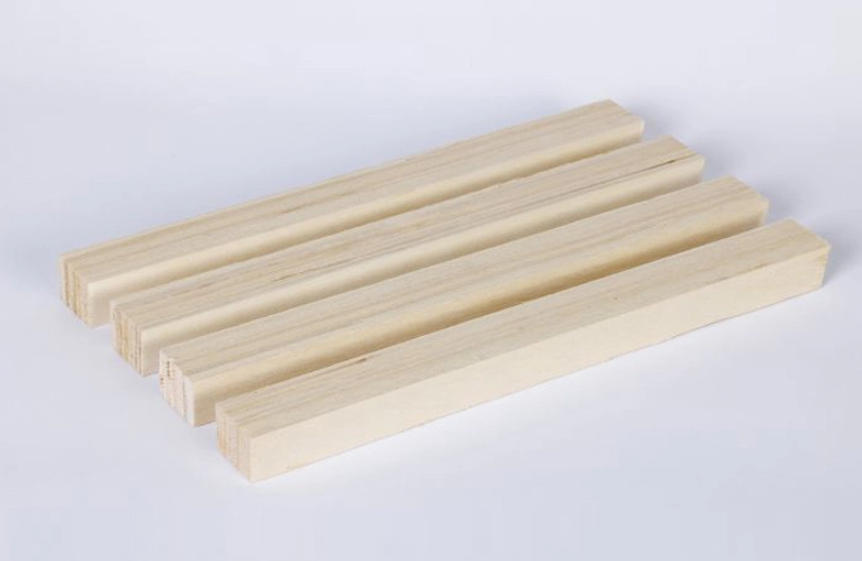
Laminated Veneer Lumber (LVL) is regarded as a high-performance core material in the modern construction industry. While it retains the natural appearance and texture of wood, its structural performance far exceeds that of traditional solid-sawn lumber. This superior strength does not stem from the tree species used, but from the highly controlled, multi-stage engineering process involved in LVL production.
Understanding how LVL is made reveals why it is the preferred choice for high-stress applications such as headers, beams, joists, and lintels. By transforming natural timber into a structural composite, manufacturers can eliminate the inherent flaws of wood and create a product with unparalleled consistency and predictable performance.
Step 1: Log Preparation and Peeling
The journey of an LVL beam begins in the forest, typically with fast-growing species such as Radiata Pine, Poplar, Douglas Fir, acacia, eucalyptus, and rubber. Once the logs arrive at the mill, they undergo a process called conditioning: they are often soaked in hot water or steamed to soften the fibers, making the wood more pliable and easier to peel without cracking. After conditioning, the logs are debarked and placed into a rotary lathe. As the log spins at high speed, a long, sharp blade peels it into a continuous thin sheet, similar to unrolling a sheet of paper. These veneers are typically 2.5mm to 4.8mm thick. This initial stage is crucial, as it allows manufacturers to inspect every square inch of the tree’s interior, identifying knots or decay that would otherwise be hidden inside a solid beam.
Step 2: Drying and Moisture Control
Freshly peeled veneer is “green,” meaning it has a high moisture content. To ensure structural stability, these veneers must be dried: they are passed through large industrial dryers to reduce their moisture content to a precise level, usually 5% to 10%.
Moisture control is the key to LVL’s dimensional stability. By drying the veneers before bonding, the final product is far less likely to warp, twist, or shrink compared to green solid lumber—which dries slowly and unevenly over time on a job site—thus ensuring long-term dimensional stability for construction projects and reducing maintenance costs for customers.
Step 3: Grading and Sorting
Once dried, the veneers are not simply stacked together; they undergo a rigorous grading process. Modern production lines use ultrasonic technology to measure the density and stiffness (Modulus of Elasticity) of each individual veneer sheet, with grades typically classified as A, B, and C.
Stronger, higher-grade veneers (usually Grade A or B) are traditionally sorted for use in the outer layers of the LVL beam, where tension and compression forces are the highest, while lower-grade veneers (Grade C) are used in the core. This engineered layup ensures the beam provides maximum strength exactly where it is needed most, optimizing structural performance.
Step 4: Layup and Adhesive Application
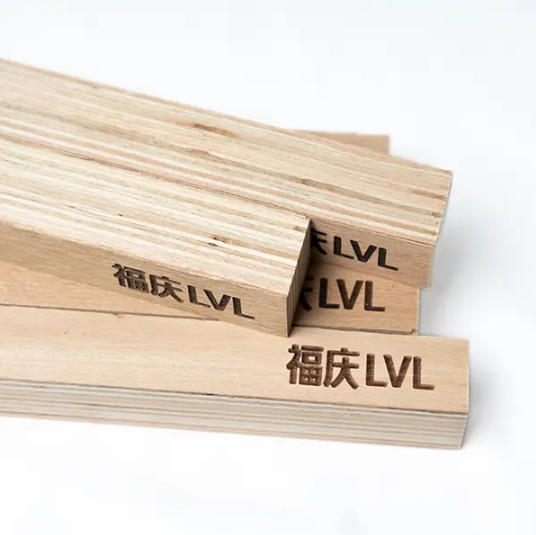
The defining characteristic of LVL production is the orientation of the wood grain. Unlike plywood—where the grain of each layer is placed at a 90-degree angle to the one below it—LVL veneers are laid up with the grain of every layer running parallel to the length of the beam, a key factor in its superior structural strength.
Before stacking, the veneers are coated with a high-performance adhesive. Most premium manufacturers, including Fuqing Wood, use water boil-proof phenol-formaldehyde resins. These waterproof glues create a molecular bond that is often stronger than the wood fibers themselves, ensuring long-term durability even in humid environments.
Step 5: The Hot Press
The stack of glue-coated veneers, known as a billet, then enters a massive hot press. This machine applies immense, uniform pressure and heat to the billet, triggering a chemical reaction in the resin that cures the glue and fuses the individual veneers into a single, homogeneous piece of engineered lumber.
The precision of this stage is vital. Fuqing Wood, for instance, leverages advanced hot-pressing technology to ensure pressure is distributed evenly across the entire length of the billet. This prevents the formation of internal air pockets or voids, which could compromise the beam’s structural integrity and safety.
Step 6: Finishing and Quality Control
After exiting the press, the LVL emerges as a continuous long slab, sometimes up to 12 meters or more. It is then sawn into specific widths and lengths based on the required service class, whether for a floor joist, a header, or a lintel.
The final steps involve:
Edge Sealing: Applying a wax-based coating to the edges to prevent moisture absorption during transport and storage, thereby extending the product’s service life.
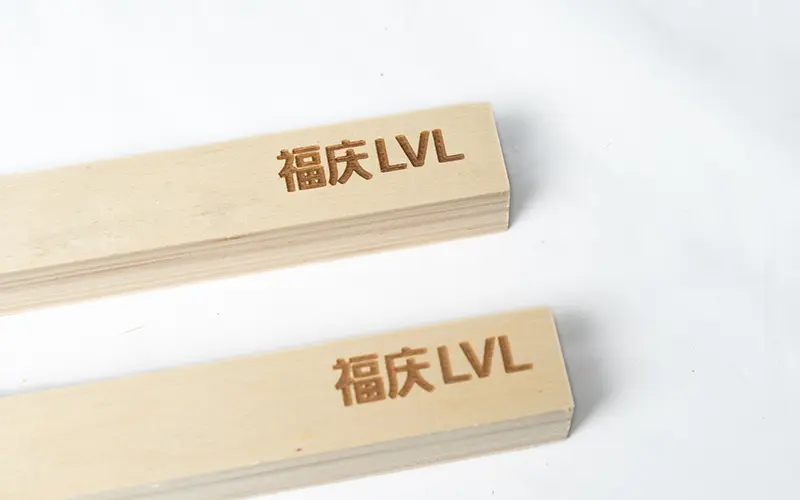
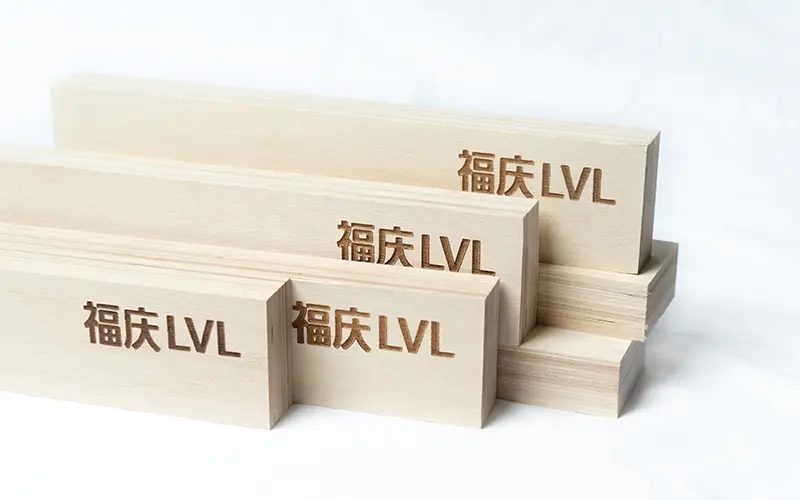
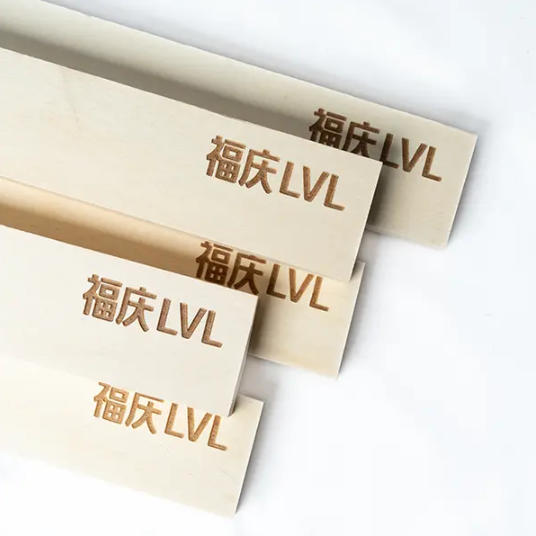
Branding: Printing the strength grade and international certification marks—such as CE, FSC, JAS, and AS/NZS 4357.2—on the side of the beam to ensure compliance with global standards.
Final Inspection: A rigorous final check to ensure the thickness and density meet the strict tolerances required for structural use. Fuqing Wood’s LVL products undergo strict quality testing in line with international standards, guaranteeing consistent performance and safety for every project.
The reason the industry is moving toward LVL is simple: it overcomes the natural variability of wood. By breaking the wood down into thin veneers and reassembling it, manufacturers can disperse natural defects like knots throughout the beam, so they no longer represent a single point of failure. This highly engineered production process results in a product that is significantly stronger and stiffer than solid timber of the same size. For architects and builders, this means they can design longer spans and more open spaces without the weight and cost of steel, optimizing construction efficiency and reducing project costs.
LVL production is a masterclass in industrial efficiency and structural engineering. By taking the best parts of natural timber and enhancing them through rigorous drying, sorting, and hot-pressing, manufacturers create a material built to meet the evolving demands of modern construction.
For those seeking high-quality, reliable LVL products that meet international standards, Fuqing Wood provides a full range of customized LVL solutions. Backed by advanced production technology, high-grade resins, and strict quality control, our LVL products are designed to help you achieve more efficient, safe, and sustainable construction. Contact us today to learn more about our products and services.
 EN
EN
 jp
jp  ko
ko