EN
EN
 jp
jp  ko
ko 
Decks are among the most popular outdoor living structures in residential and commercial construction. Whether used for relaxing, dining, or entertaining, a well-built deck relies heavily on its structural framing system. The hidden framework beneath the deck boards, including deck joists, beams, and support members, determines the deck’s strength, stability, and longevity.
In modern deck construction, traditional solid timber framing is increasingly complemented or replaced by engineered wood products such as LVL beams and I-joists. These engineered components offer higher strength, improved dimensional stability, and consistent structural performance. Manufacturers like Fuqing Wood Industry provide engineered wood solutions, including LVL beams and OSB I-joists, that can support reliable deck framing systems.
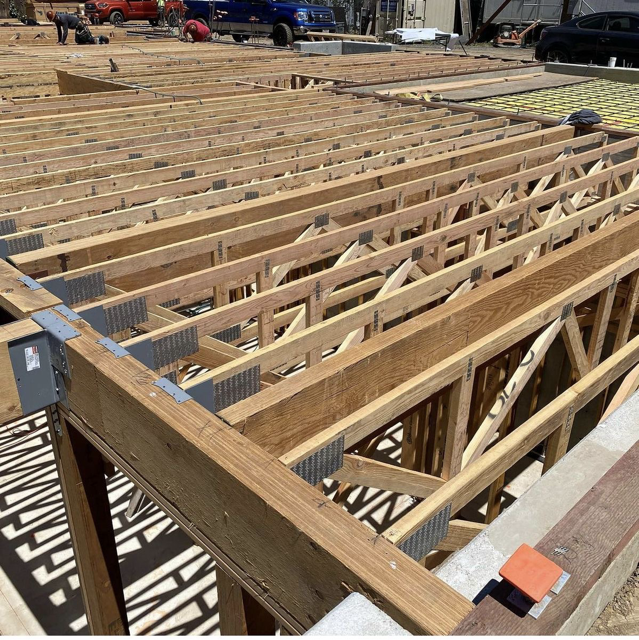
A deck joist is a horizontal structural member that forms the primary support framework for deck boards. These joists run parallel to each other and are typically installed perpendicular to the deck boards. Their main function is to transfer loads from the deck surface to the supporting beams and posts below.
In a typical deck structure, the load path works as follows:
Deck boards transfer weight to the joists.
Joists transfer loads to beams.
Beams transfer loads to posts and footings.
Footings distribute loads into the ground.
Properly installed joists are critical because they support the weight of people, furniture, and environmental loads such as snow and wind. If the joists are improperly spaced or installed, the deck surface can become uneven, bouncy, or structurally unsafe.
A typical deck framing system consists of several interconnected structural elements.
The ledger board attaches the deck frame to the main structure of a house. Joists are usually fastened to the ledger board using metal joist hangers.
A rim joist runs perpendicular to the deck joists and forms the outer edge of the deck frame. It ties the joists together and helps maintain structural alignment.
Beams run perpendicular to joists and support them at intervals. Beams are typically supported by posts and footings.
Blocking consists of short pieces of lumber installed between joists to prevent twisting or lateral movement. According to installation guidelines, blocking and joist hangers should be installed during framing to keep joists aligned and stable.
One of the most important aspects of deck framing is joist spacing. The spacing determines the deck’s ability to support loads and maintain a stable walking surface.
16 inches on center (OC) – the most common spacing for standard deck boards
12 inches OC – used when deck boards are installed diagonally or when heavier loads are expected
24 inches OC – sometimes used with thicker decking boards
Proper spacing is essential for safety and durability. Incorrect spacing can lead to weak or sagging deck surfaces and potential structural hazards. [1]
Deck board material (wood vs composite)
Joist span length
Structural load requirements
Local building codes
For composite decking boards, manufacturers often recommend closer spacing because composite materials can flex more than solid wood.
Deck joists can be constructed from several types of materials depending on structural requirements and budget.
Traditionally, deck joists are made from pressure-treated dimensional lumber, such as 2×8 or 2×10 boards. This material resists moisture and insect damage but can still warp, twist, or shrink over time.
Modern construction increasingly uses engineered wood joists because they offer improved structural reliability. Two common engineered products include LVL beams and engineered I-joists.
These materials are manufactured under controlled conditions, resulting in consistent strength and dimensional stability.
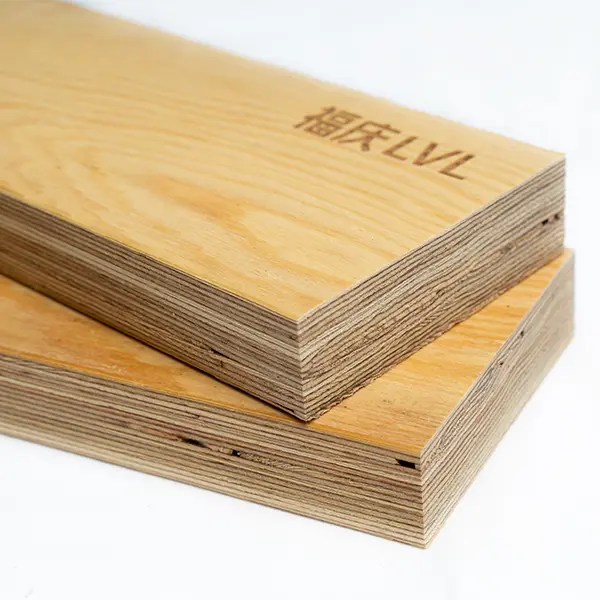
LVL (Laminated Veneer Lumber) is an engineered wood product created by bonding multiple thin wood veneers together with structural adhesives. The grain of each veneer runs in the same direction, producing a material with excellent load-bearing performance.
Common exterior LVL beams for decks:
Deck support beams
Long span joists
Structural headers
Load-bearing rim boards
High Structural Strength: LVL beams are stronger than comparable solid lumber because defects such as knots are distributed throughout the layers.
Dimensional Stability: Unlike traditional timber, LVL resists twisting, shrinking, and warping.
Longer Spans: LVL beams allow deck designs with longer spans and fewer support posts.
Efficient Material Use: Engineered wood uses smaller trees and wood fibers more efficiently than large solid lumber.
Fuqing manufactures a wide range of structural LVL beams suitable for applications like deck beams, framing members, and structural supports. These products are engineered for consistent quality and reliable performance in structural projects.
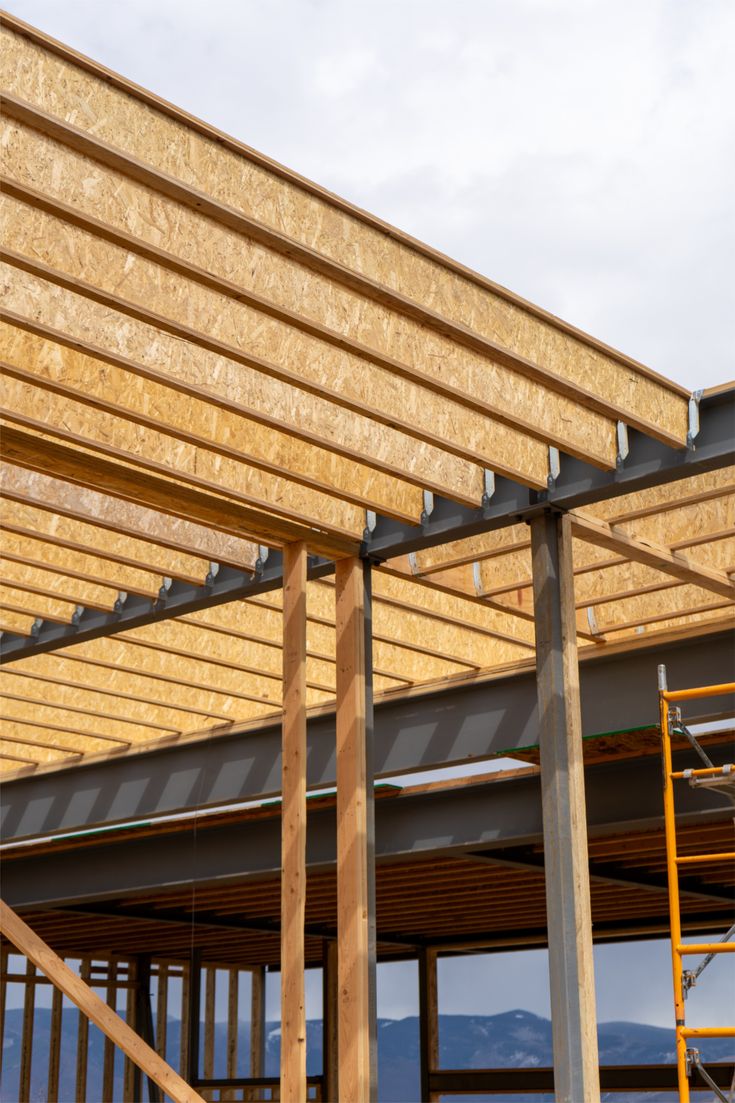
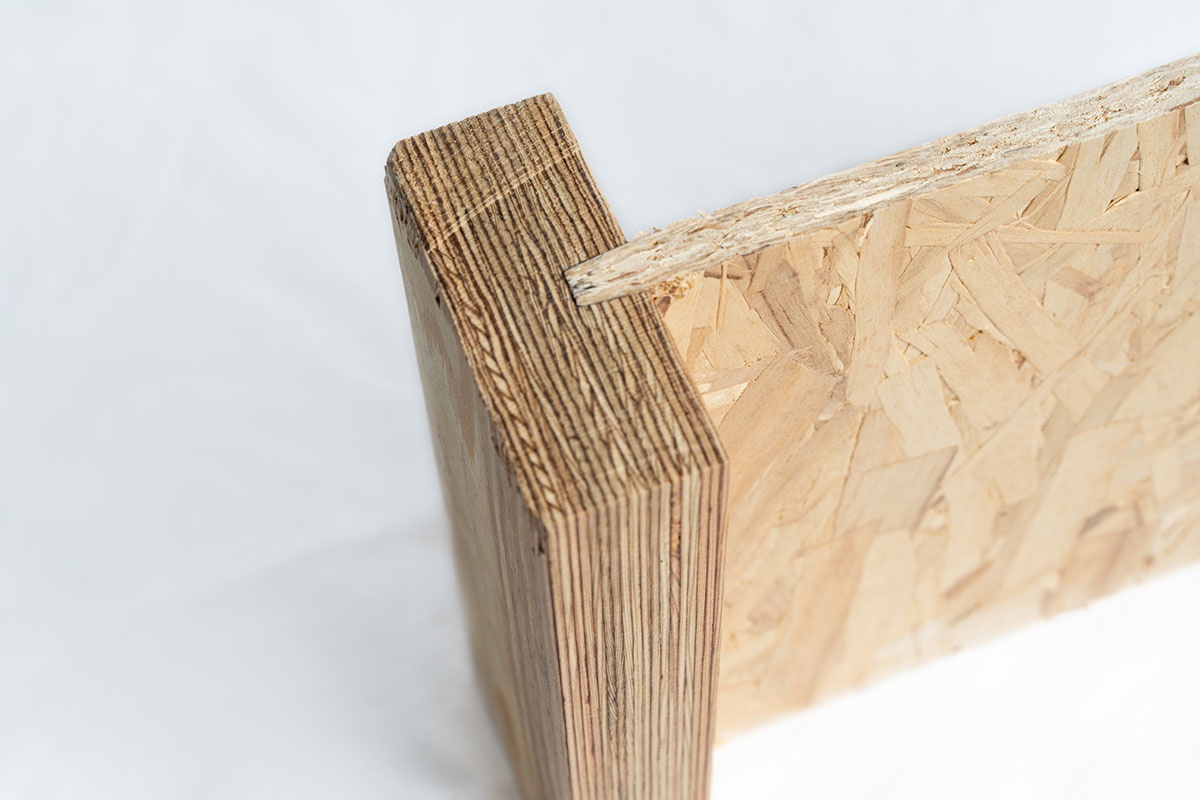
Another engineered option for deck framing is the wood I-joist. These joists feature an “I”-shaped cross-section consisting of top and bottom flanges (often LVL or solid lumber) and a central web made of OSB. The shape maximizes structural efficiency, providing high bending resistance with less material.
High Strength-to-Weight Ratio: The I-shape allows joists to support heavy loads while remaining lightweight.
Reduced Warping: Engineered manufacturing prevents the twisting and warping common in dimensional lumber.
Improved Span Capability: I-joists can span longer distances than many traditional joist materials.
Fuqing’s I-joists for sale are designed for structural framing applications, including floors, roofs, and potentially deck structures when protected from direct exposure.
Joists rest on top of beams supported by posts. This design is common for larger decks.
Joists attach to the sides of beams using joist hangers, creating a cleaner profile.
Joists extend beyond beams to create an overhang. This design allows larger deck areas without additional posts.
Engineered materials like LVL beams can improve the performance of all these layouts by allowing longer spans and greater load capacity.
Engineered wood products provide several advantages compared with traditional lumber. These benefits explain why engineered wood is increasingly used in structural framing systems for modern buildings.
| Feature | Engineered Wood | Traditional Lumber |
| Strength consistency | High | Variable |
| Dimensional stability | Excellent | Moderate |
| Span capability | Longer | Limited |
| Warping resistance | High | Lower |
| Material efficiency | Optimized | Lower |
Deck joists form the structural backbone of any deck, supporting the walking surface and transferring loads throughout the framing system. Proper joist spacing, installation, and structural design are essential for building a safe and durable outdoor structure. While traditional pressure-treated lumber remains common, engineered wood products such as LVL beams and I-joists are becoming increasingly popular in deck construction. These materials provide superior strength, dimensional stability, and long-span capabilities.
Manufacturers like Fuqing Wood Industry offer engineered wood solutions that can be integrated into modern deck framing systems. By combining sound engineering practices with high-quality materials, builders can create decks that remain strong, stable, and attractive for decades.
Reference:
[1] https://www.trex.com/academy/how-to-guides/all-guides/how-to-install-deck-joists/